Chronology
Tim Clifford and Helen HsuNote: When an event cannot be dated with certainty, it appears in its most likely chronological position, and the date or span of dates is enclosed in brackets.
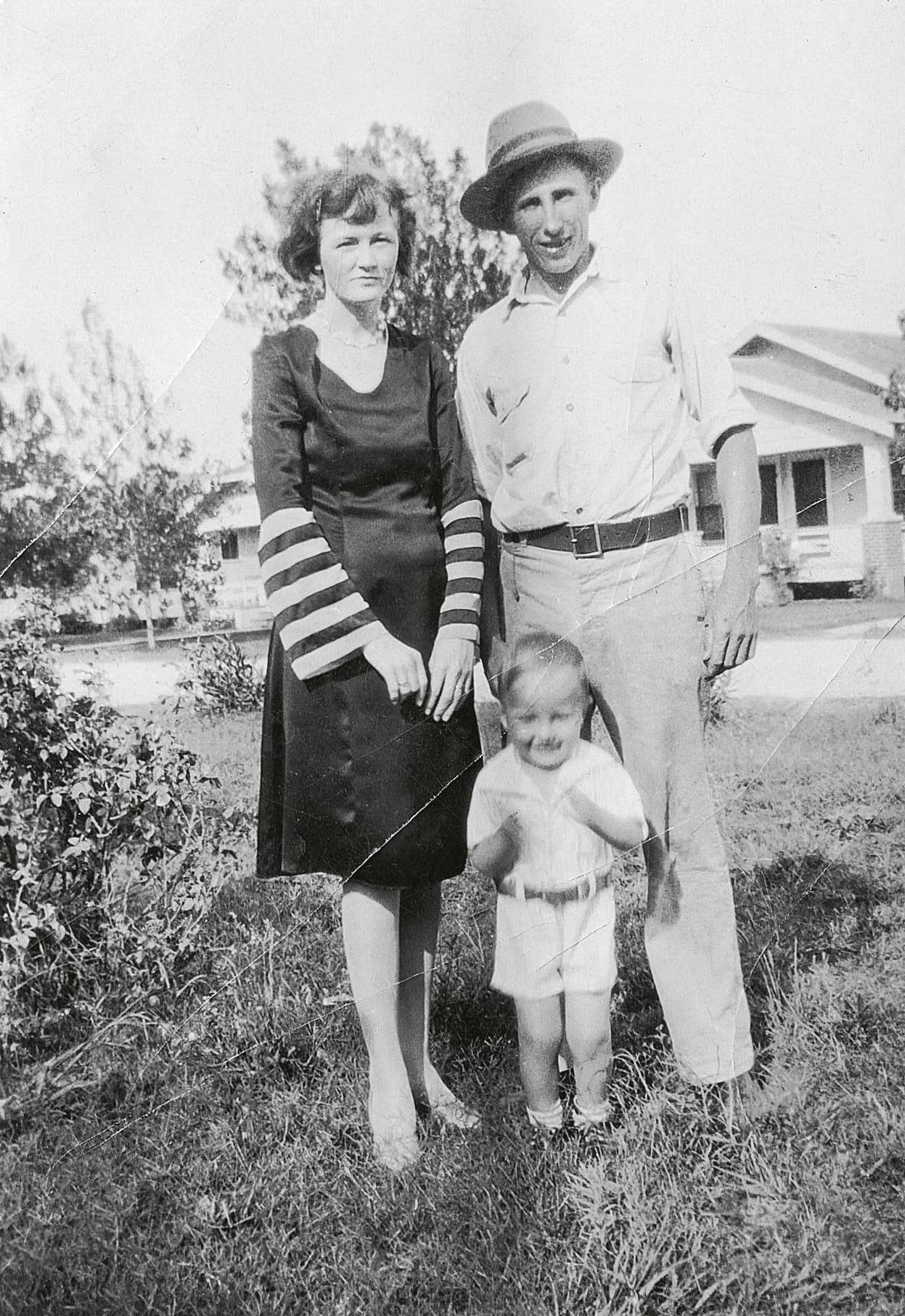
Fig. 1. Robert Rauschenberg with his parents, Dora and Ernest, in front of their house in Port Arthur, Texas, ca. 1928
October 22, 1925: Milton Ernest Rauschenberg is born in Port Arthur, Texas, an oil refinery town on the Gulf of Mexico, near the Louisiana border.1 He is the only son of Ernest Gustus Rauschenberg (1902–1963) and Dora Rauschenberg, née Dora Carolina Matson (1902–1999). Ernest works as a lineman for Gulf States Utilities, the regional electric company. An avid hunter and fisherman, he raises hunting dogs and is a sought-after hunting guide. Dora is a talented seamstress, known for her ability to cut patterns efficiently so as to conserve fabric. She makes her son’s clothes throughout his childhood and adolescence. The family is devout and attends the Church of Christ located on Sixth Street.
Rauschenberg shows a love for animals from an early age and cares for many pets, including dogs, ducks, a frog, geese, a goat, rabbits, and a rooster.
Aspires to become a preacher but drops this ambition around age thirteen because his church considers dancing—one of his favorite activities—to be sinful.
Draws frequently in school notebooks and textbooks, copying images of actresses such as Veronica Lake and characters such as Mickey Mouse and Betty Boop from magazines and comics.
April 23, 1936: Janet Rauschenberg (later Begneaud), Rauschenberg’s sister and only sibling, is born.
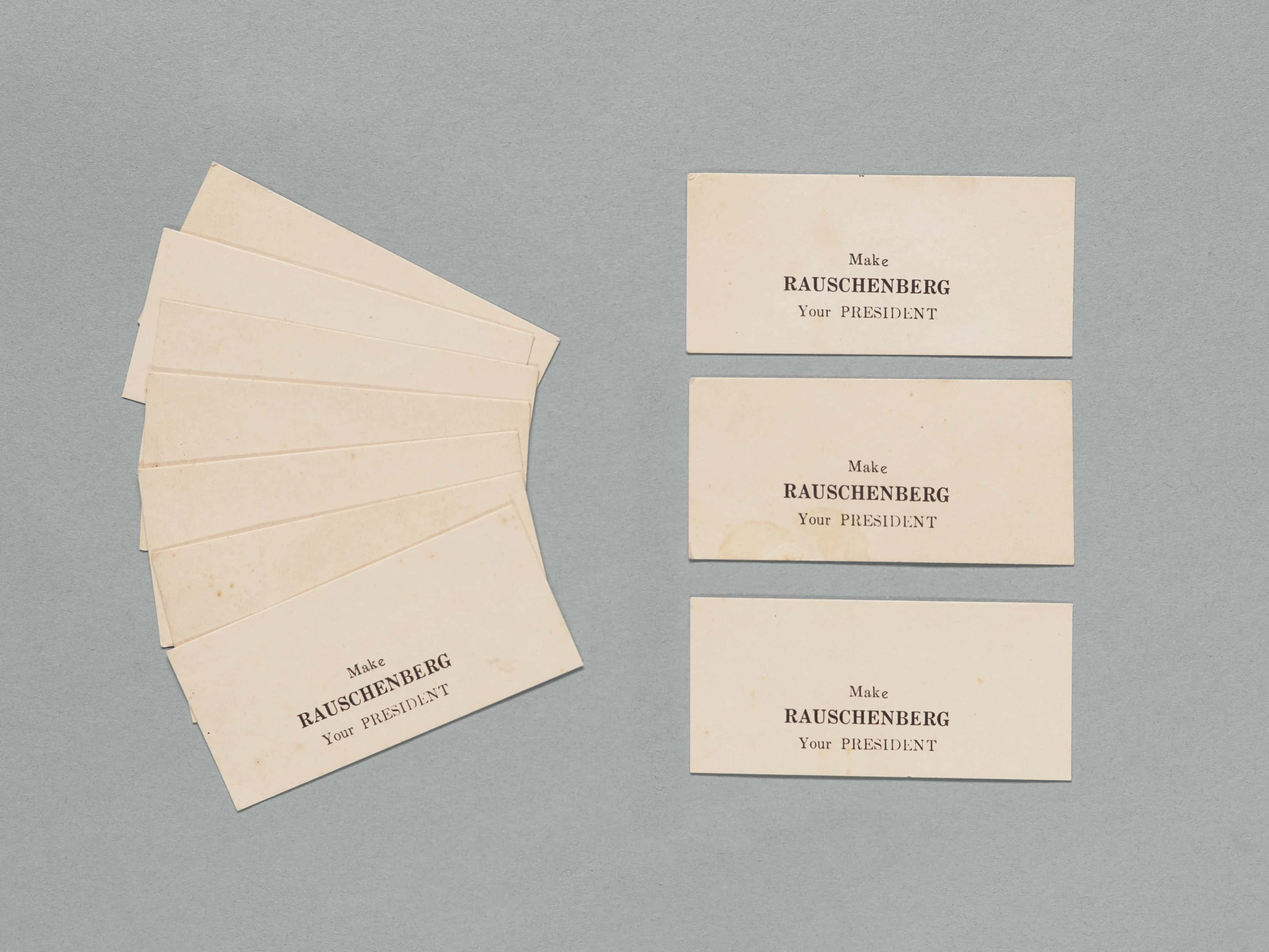
Fig. 2. Cards from Robert Rauschenberg’s 1942 campaign for student body president of Thomas Jefferson High School, Port Arthur, Texas
Attends Thomas Jefferson High School in Port Arthur. Joins the school’s theater club, the Repertoire Players, serving on the advertising and sound crews and later working as a costume and set designer. Holds several part-time jobs, including salesclerk at Bluestein’s department store and swimming pool attendant.
Around age sixteen, gets his first pair of glasses.2 Later attributes his poor grades and lack of interest in school to the fact that he had never been able to see to the front of the classroom.
In the spring of junior year, runs unsuccessfully for student body president. Draws posters featuring movie stars such as Betty Grable and Hedy Lamarr endorsing his candidacy. Instead of giving campaign speeches, releases a goose into each classroom with a sign around its neck reading “Vote for Rauschenberg.”3
As a senior, applies to the University of Texas at Austin to fulfill his parents’ wish that he continue his education. When he is accepted, they agree that if he is unhappy at the end of one year, he can drop out.4
May 27, 1943: Graduates from high school in the bottom quartile of his class.5
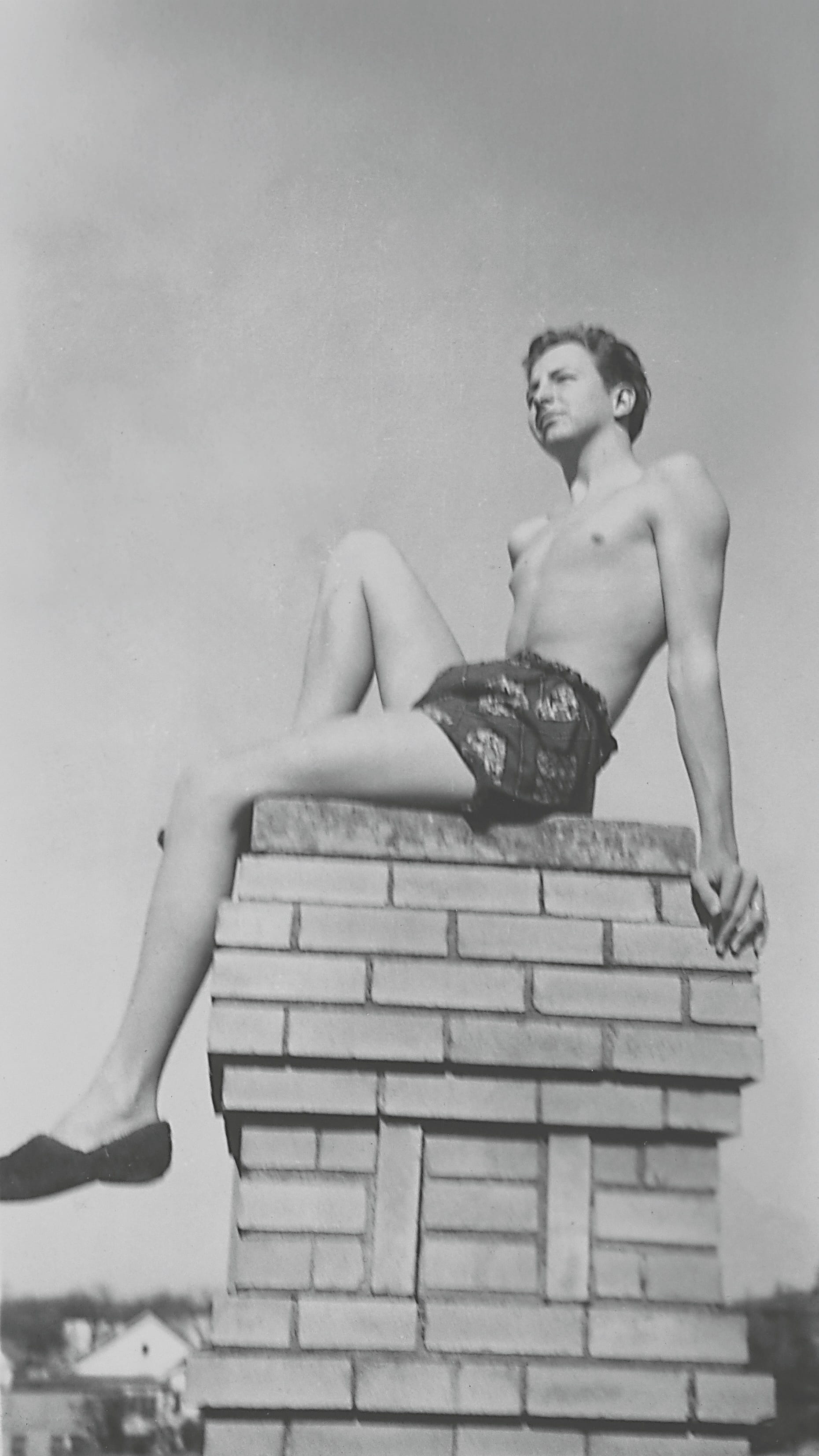
Fig. 3. Robert Rauschenberg on the roof of the YMCA, Austin, Texas, January 20, 1944
Takes remedial courses during the summer in preparation for studying pharmacy at the University of Texas (it does not offer a program in veterinary medicine, which he had hoped to study, and pharmacy is the closest alternative). Enters the university in the fall and shares a room at the Austin YMCA with his best friend from high school, Arthur Welton Frakes, Jr. (1925–2006), who had matriculated the previous year.
Enjoys university life but finds himself “temperamentally unsuited” for pharmacy.6 Weeks into the fall semester, stops attending classes and gets a job at the soda fountain in a Renfro drugstore in Austin.
November 10: Appears before the local draft board in Port Arthur and is classified I-A, or fit for service. Enlists in the U.S. Navy and is ordered to report for duty on January 28, 1944.7
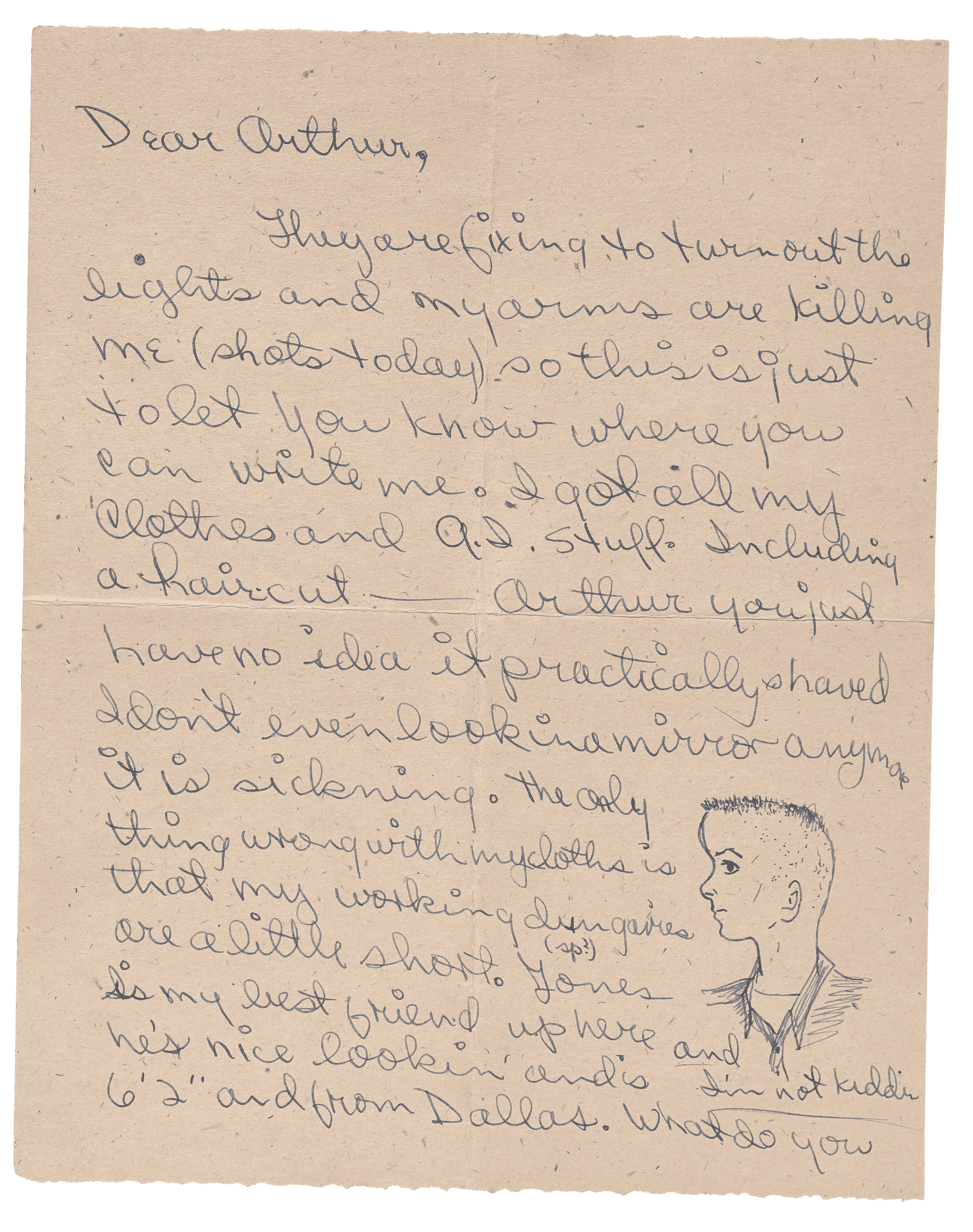
Fig. 4. Page of a letter from Robert Rauschenberg to Arthur Frakes, with a self-portrait of the artist, February 1944
January 18: Officially withdraws from the University of Texas.8
January 28: Reports to the Naval Recruiting Station in Houston and is inducted with the rank of Apprentice Seaman. On account of his eyesight, he is classified USN-I (Special Assignment—Defective Vision) and thus is approved only for noncombat duty.
February 7–March 20: Undergoes basic training at Camp Scott at Farragut Naval Training Station in Farragut, Idaho. At the end of training, he is named Honor Man of his recruit company and advances to the rank of Seaman Second Class.
April 10: Transferred to the Hospital Corps School at the U.S. Naval Hospital in San Diego for basic hospital corpsman training.
May–June: Promoted to Hospital Apprentice Second Class on May 26 and transferred to the U.S. Naval Hospital in Corona, California, where he completes a three-week course in nursing and is assigned to a tuberculosis ward. While he had previously struggled academically, in the Navy he is an eager student and adept at working with patients.
September 7: Transferred to the Naval Convalescent Hospital in Arrowhead Springs, California. There, he works on infrastructure projects with a civilian crew, including the construction of a water line to assist in fighting wildfires.9 Writes to Frakes, “Remember me I’m the sailor who joined the navy to see the mountains.”10
November 1: Promoted to Hospital Apprentice First Class.
December 4: Transferred to the U.S. Naval Repair Base, San Diego, where he works in the medical laboratory and pharmacy. While stationed there, and over his remaining eighteen months in California, he spends time in Los Angeles, attracted by the glamour of Hollywood, and hitchhikes up the California coast and as far south as Ensenada, Mexico.
[December 25]: Receives a used camera as a Christmas gift from his parents.
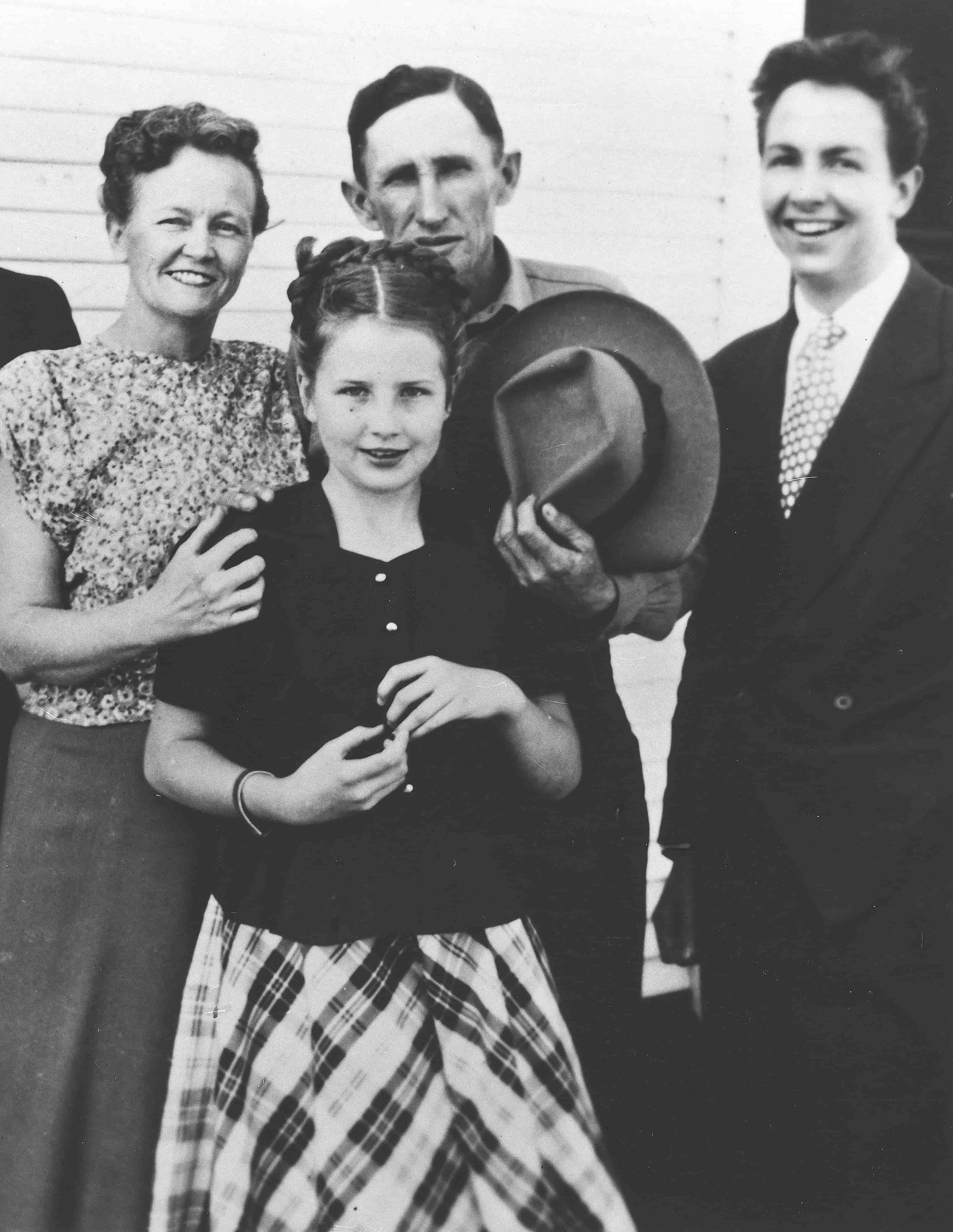
Fig. 5. Robert Rauschenberg with his parents and sister, Janet, ca. 1948
January 4: Writes to Frakes about his desire to study in Paris and one day open fashion salons in Dallas and New York.11
July 2: Promoted to the petty officer rank of Pharmacist’s Mate Third Class. His family visits him in San Diego at the end of the month.
July 31: Transferred to the U.S. Naval Hospital in San Diego to train as a neuropsychiatric technician. In this role, he will help treat sailors returning from battle with “combat fatigue,” today referred to as post-traumatic stress disorder (PTSD).
December 14: Transferred to the U.S. Naval Hospital at Santa Margarita Ranch, Oceanside, California, where he will finish out his service.
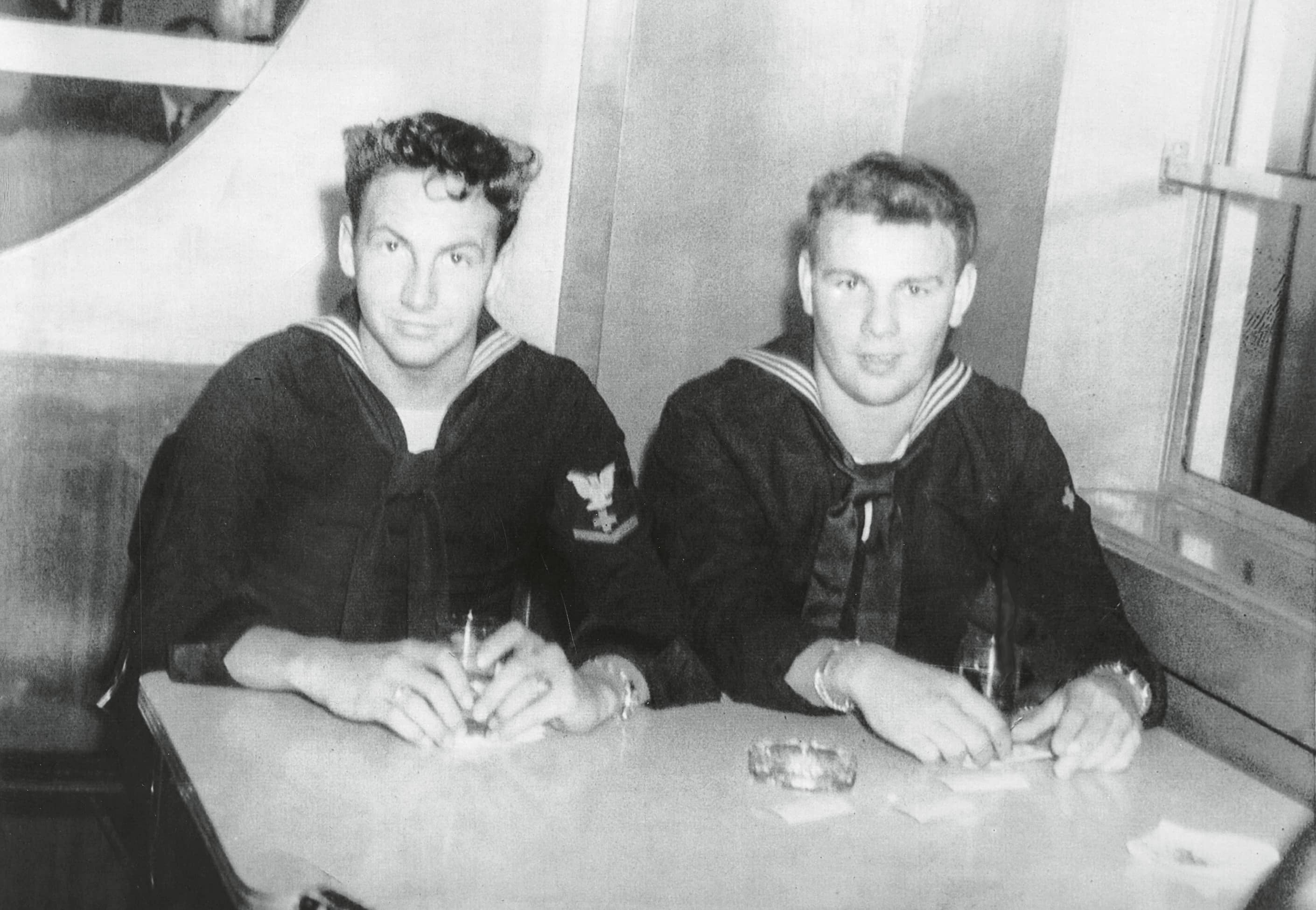
Fig. 6. Robert Rauschenberg with Robert Hubler, Long Beach, Calif., 1946
Winter–Spring: Visits the Henry E. Huntington Library and Art Gallery in San Marino, California, where he sees fine art in person for the first time.12 Procures art supplies and creates his first oil painting, a portrait of his fellow sailor Robert Hubler.13
June: Receives an honorable discharge from the Navy on June 6, then remains in California for a few weeks. In Los Angeles, investigates opportunities in fashion design and inquires about classes at the University of California, Los Angeles. Travels north to San Francisco before hitchhiking home to his family, arriving in Port Arthur by June 26.14
[October–December]: Moves to Los Angeles to start a job with Original by Brett, a bespoke women’s wear boutique on Westwood Boulevard. In early December, begins a new job working for the women’s wear designer Louella Ballerino (1900–1978) as a packing clerk. There, he meets Marjorie June Pearman (later Ludington; 1922–1978), known as Pat, Ballerino’s personal assistant and secretary. Pearman, a few years older than he, is from Brunswick, Missouri, and has studied fashion design and illustration at the Edna Marie Dunn School of Fashion in Kansas City. After viewing his drawings and fashion designs, Pearman recognizes his talent and encourages his artistic endeavors.15 She and the other employees begin calling him Bob “because I looked like my name ought to be Bob.”16
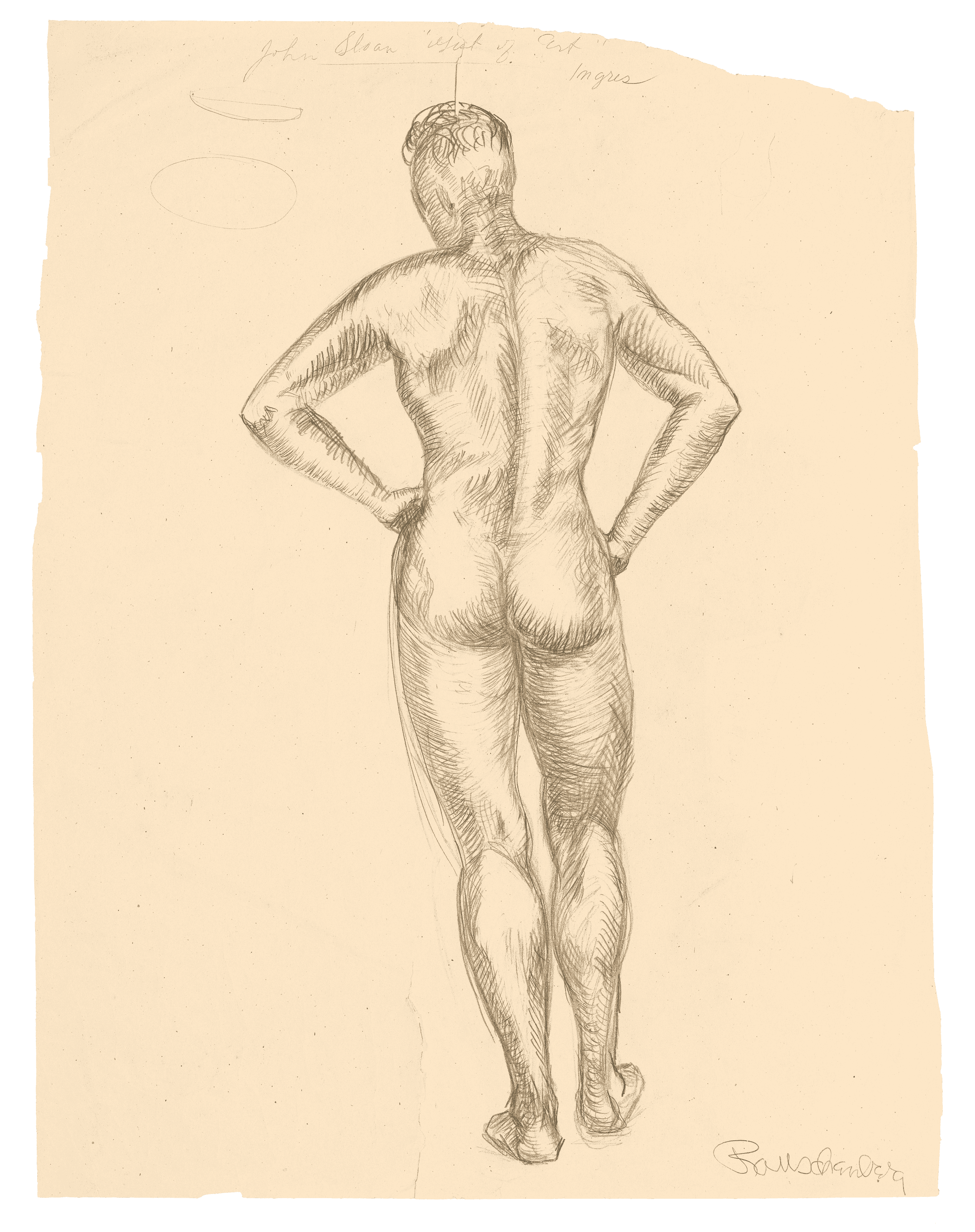
Fig. 7. Robert Rauschenberg, drawing of a male nude, ca. 1947. Pencil on paper; 24¾ × 18¾ in. (63 × 47.7 cm). Collection of Link Pearman Ludington
Late January: When her mother falls ill, Pearman returns home to Missouri and resumes working at Donnelly Garment Company in Kansas City, where she had been a personal assistant and secretary before moving to Los Angeles in June 1946. Rauschenberg follows soon after with the intention of studying at the Kansas City Art Institute (KCAI). On arriving at Kansas City’s Union Station at 3 am, he stays up all night drinking coffee in the deserted station and decides he will change his name from Milton to Bob.17
February 3–May 24: Attends the spring semester at KCAI on the G.I. Bill (officially, the Servicemen’s Readjustment Act of 1944). Studies drawing, design and composition, anatomy, art history, and fashion design. Writes his parents, “It’s what I’ve always wanted. A chance to show people I have the stuff. … By the way I’m letting everyone here call me Bob, so address my letters as such will you?”18 His mother continues to call him Milton throughout her life.
Works multiple jobs to save money, believing that one “had to go to Paris if you were going to be an artist.”19 Prepares window displays for the Kansas City women’s wear boutique Cricket West; makes hats for Donnelly Garment Company; designs fashion-show sets for Ashell’s, a women’s wear store in Kirksville, Missouri; and fabricates props and sets for local commercials.20
June 9–August 2: Takes classes in drawing and fashion illustration during the summer session at KCAI.
September 29, 1947–January 30, 1948: Attends the fall semester at KCAI, studying anatomy, art history, fashion design, costume history, pictorial design, and sculpture.
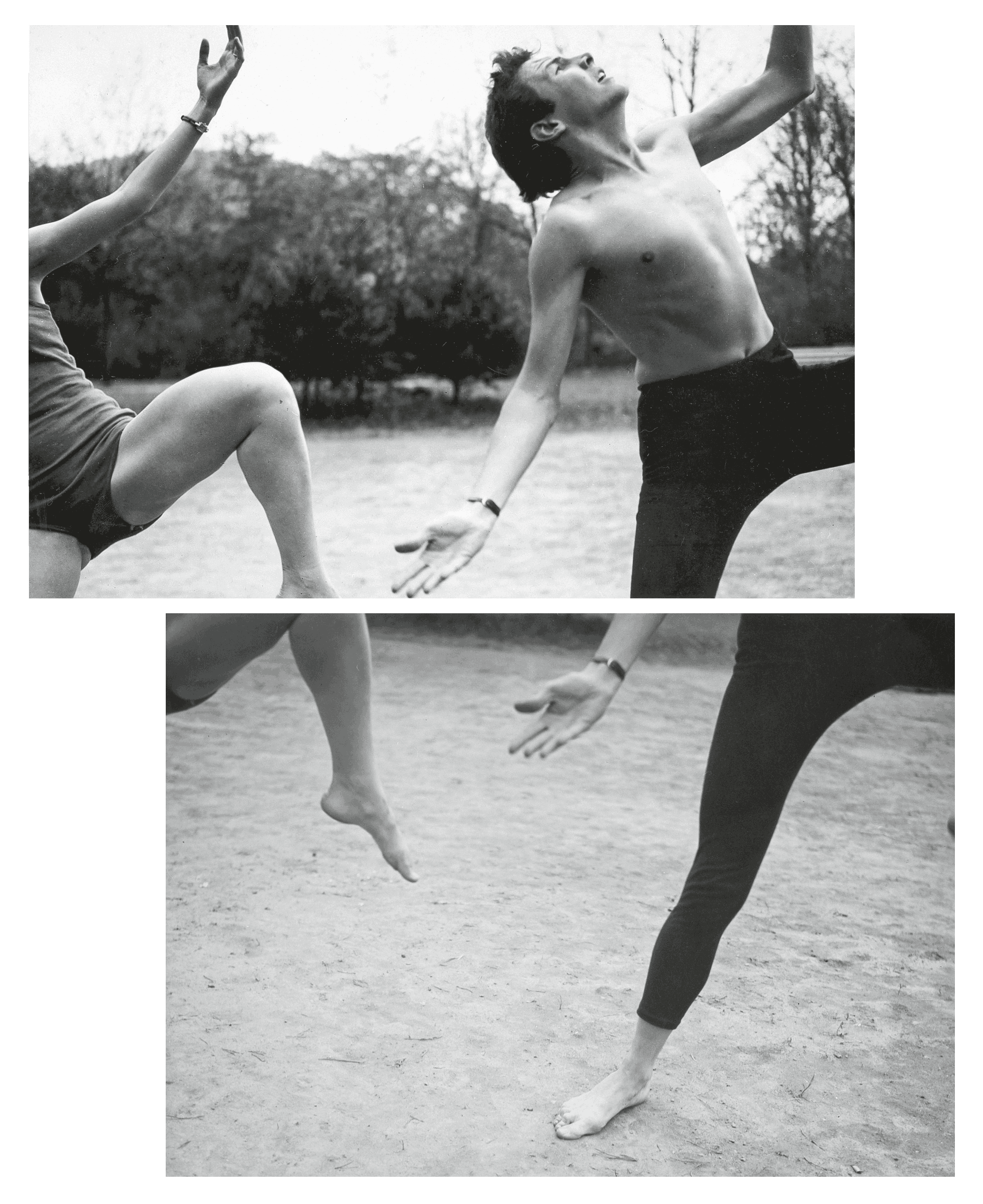
Fig. 8. Hazel Larsen Archer, Robert Rauschenberg and Betty Jennerjahn, ca. 1948–49. Gelatin silver prints; each sheet 6¼ × 8¾ in. (15.9 × 22.2 cm). Black Mountain College Museum + Arts Center, Asheville, N.C.
February 2–May 29: Attends his final semester at KCAI, studying fashion design, music appreciation, and sculpture. His clothing designs are featured in Kansas City’s Spring Flower Festival,21 and his beige wool ensemble wins second prize in the suit category at the annual KCAI outdoor fashion show.22
[April]: Rauschenberg’s father is transferred by Gulf States Utilities to Lafayette, Louisiana, and promoted to general line foreman.23 The family rents a cottage at Azalea Court in Lafayette for several months before building a new home on Brookside Drive.
[May 29]: Departs Kansas City for New York.
June 2: Embarks for France from New York aboard the SS Marine Falcon, a converted troop ship, arriving in Le Havre on June 12, then making his way to Paris.24
Summer: Enrolls at Académie Julian on the G.I. Bill. Attends painting and drawing classes and meets Susan Weil (b. 1930), a fellow Julian student who lives in the same pensione as he.25 Weil is a recent graduate of the prestigious Dalton School in New York, where she studied art with Aaron Kurzen, Rufino Tamayo, and Vaclav Vytlacil.
Dissatisfied with Académie Julian’s traditional instruction, Rauschenberg and Weil attend evening life-drawing classes at the Académie de la Grande Chaumière and sketch and paint on the streets of Paris and in their pensione. They visit museums and galleries, where Rauschenberg first encounters the work of Henri Matisse and Pablo Picasso.
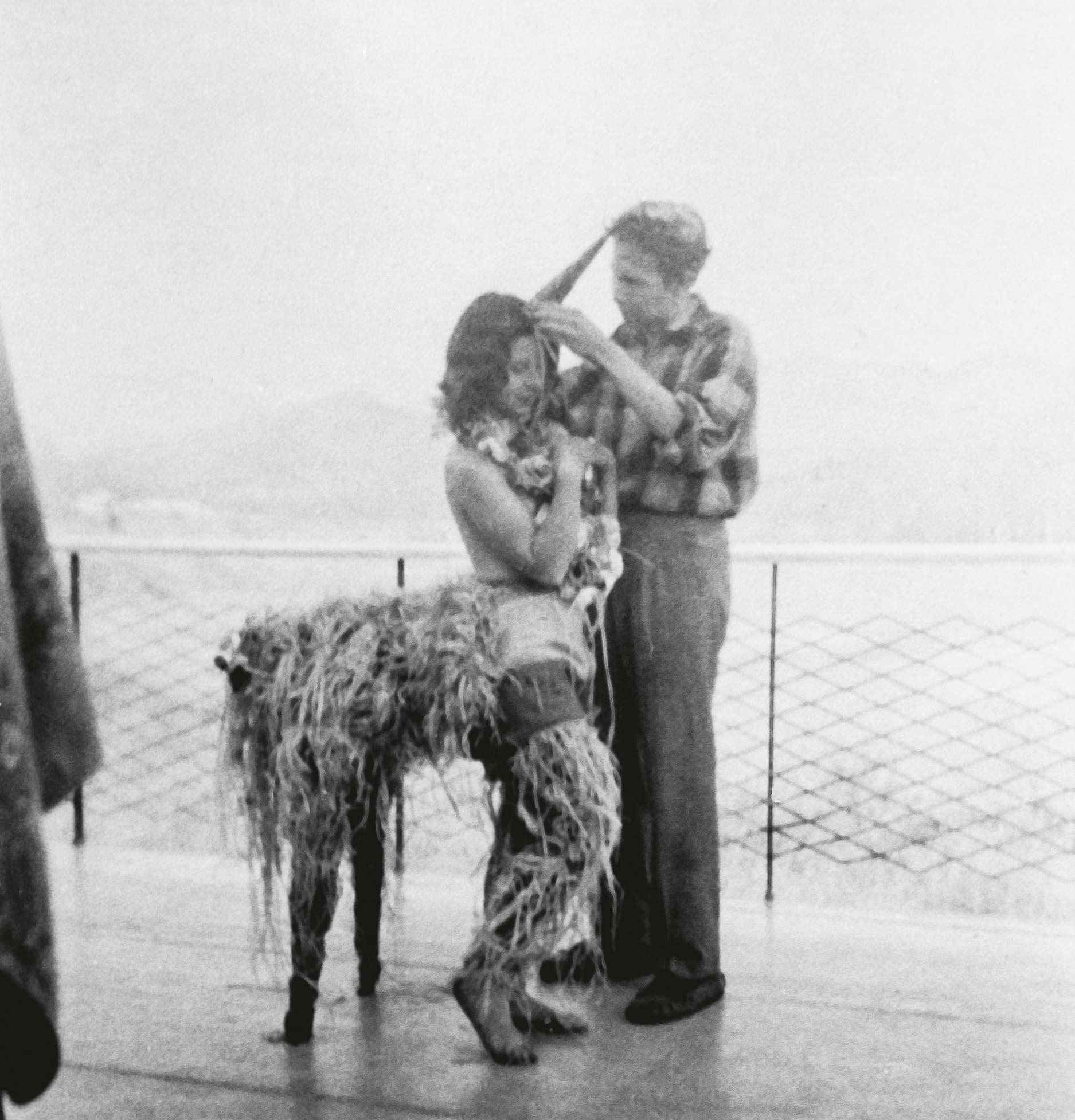
Fig. 9. Robert Rauschenberg making adjustments to the unicorn costume he designed for his sister, Janet, modeled by Ingeborg Svarc, Black Mountain College, N.C., 1949
September 23: Sails for New York aboard the SS Marine Tiger, arriving on October 3.
October 16: Follows Weil to Black Mountain College near Asheville, North Carolina, where she has already enrolled. Founded in 1933, the progressive institution is led by Josef Albers (1888–1976), a former instructor at the Bauhaus in Germany. Rauschenberg starts classes—drawing and painting with Albers, dance with Elizabeth Jennerjahn (1923–2007), and chorus with Charlotte Schlesinger (1909–1976)—one month into the fall term, again on the G.I. Bill. Fellow students include Ruth Asawa, Donald Droll, Delores Fullman, Hazel-Frieda Larsen (later Archer), and Andy Oates.
As his obligatory work assignment, joins Weil on the “Truck Crew,” or garbage detail, through which they find castoffs for use in costumes and collages.26
November 28: The Good and Obedient Young Man: A Play in the Japanese Manner, by Betty Barr and Gould Stevens, is presented in a student production at Black Mountain. Rauschenberg has designed the set and costumes with Weil and plays the role of the “obedient young man.”27
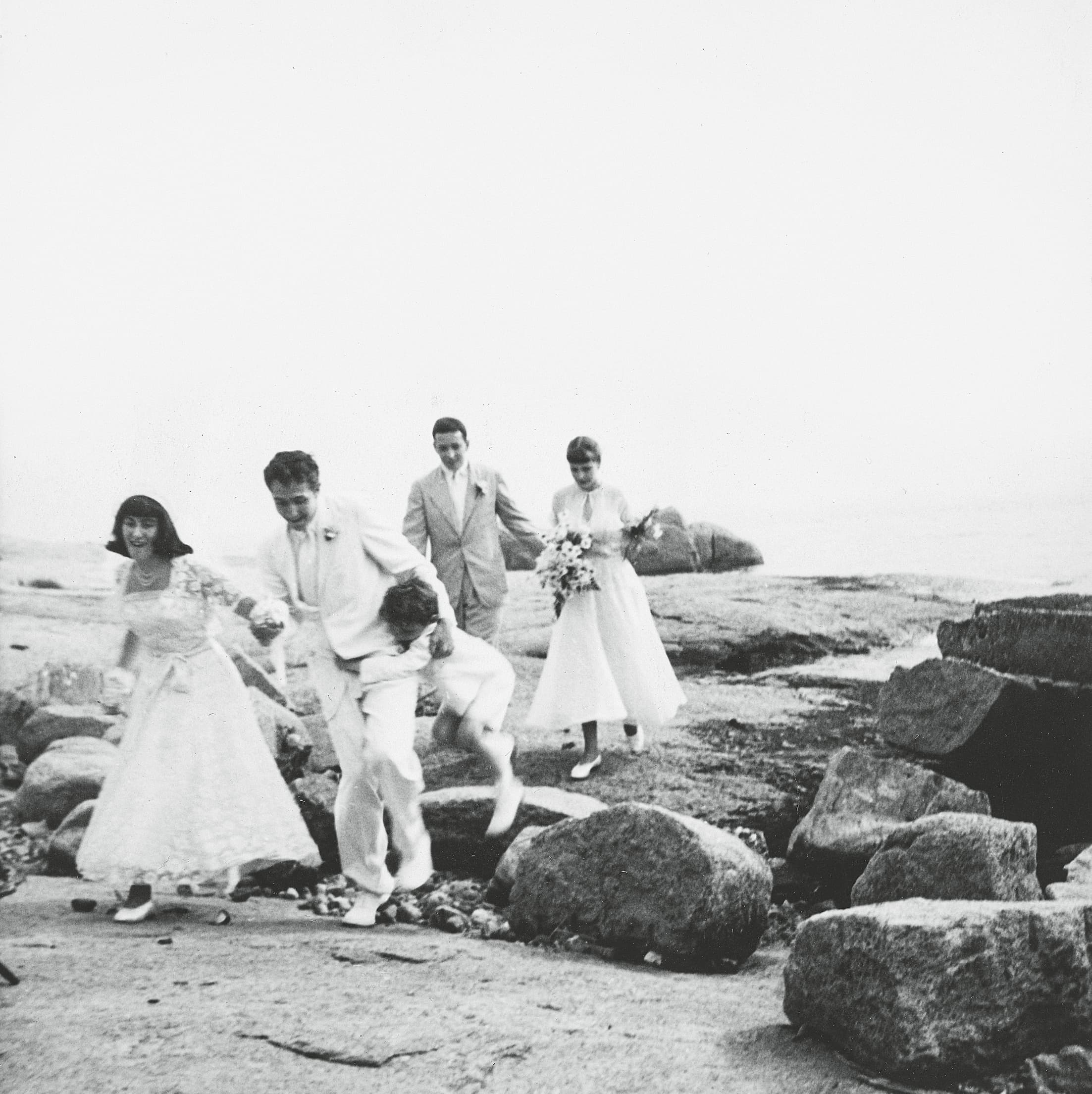
Fig. 10. Robert Rauschenberg and Susan Weil at their wedding, with Jimmy Weil, Donald Droll, and Janet Rauschenberg, Outer Island, Conn., June 21, 1950
February 14–June 15: Takes eight classes during the spring term at Black Mountain: color, drawing, and painting with Josef Albers; textile construction with Anni Albers (1899–1994) and Trude Guermonprez (later Elsesser; 1910–1976); voice with Johanna Jalowetz (1885–1966); dance and elements of movement with Jennerjahn; and chorus with Schlesinger. Josef Albers’s color class, rooted in theories that will shape his 1963 treatise Interaction of Color, proves pivotal for Rauschenberg in the years that follow, mostly as something to react against. At the end of the semester, Albers writes that Rauschenberg “though often undisciplined and sloppy improved consistently toward the end of term.”28
Makes a unicorn costume for his sister, Janet, which she wears in a Mardi Gras pageant held in Lafayette on March 1, and a dress for his fellow student Ingeborg Svarc (later Wages, then Lauterstein), known as Inga, which she wears to her wedding in April.29
Dances with Ruth Asawa (1926–2013), a fellow student of Jennerjahn’s, in an outdoor performance set to Igor Stravinsky’s Rite of Spring (1913) and involving a lit torch.30
March 31: Designs the costumes (black leotards “bespangled with mirrors” and aluminum foil headpieces) for an event held in the college dining hall in honor of Weil’s birthday, with their fellow students Svarc and Ted Dreier, Jr., dancing and Julie Light playing piano music composed by Stanley Gordon Cooke.31
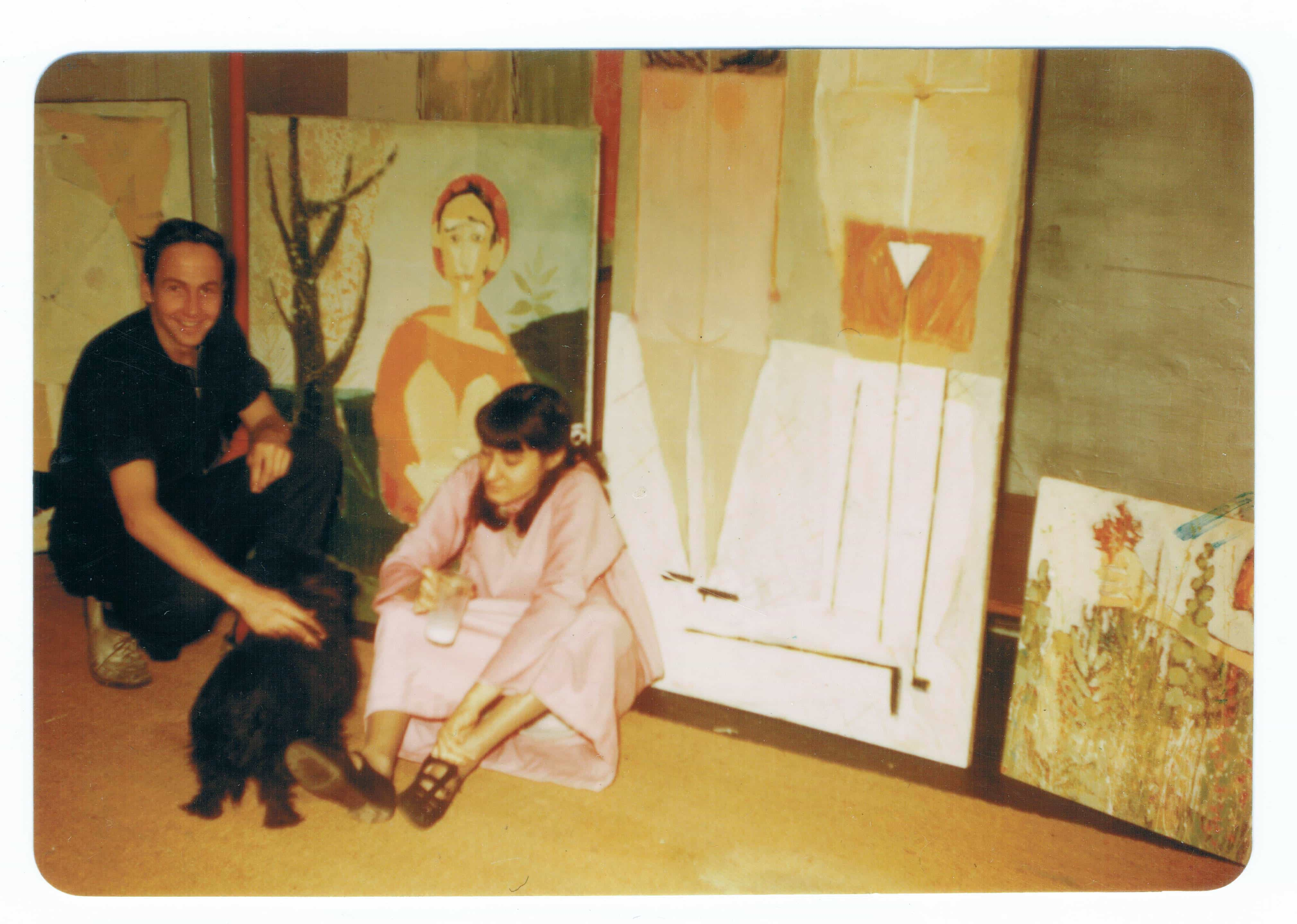
Fig. 11. Robert Rauschenberg and Susan Weil in their apartment with several of her paintings and a dog, 6 West 95th Street, New York, ca. 1951
Summer: Stays with Weil at her family’s home on Outer Island, Connecticut. Paints throughout the summer and learns from Weil how to make cyanotypes.32 Working outdoors with rolls of light-sensitive paper, they use natural materials such as shells, leaves, and flowers to create the prints; Weil’s younger brother, Jimmy, also serves as a model.
August 17: Writes to his parents of his progress on seven paintings, including Church Painting (7),33 which his mother has requested that he paint for the baptistery of their Lafayette church’s new building.
Fall: Moves to New York. Rents a room near the Weil family’s brownstone at 432 East 87th Street.
With Weil, frequents the galleries of Charles Egan, Sidney Janis, Samuel Kootz, and Betty Parsons, located along 57th Street, where they encounter the latest developments in European and American art.
Later in the semester, moves to a loft at 25 Willett Street, in Lower Manhattan near the Williamsburg Bridge, which he shares with a group of students from ASL.
September 16–November 30: Attends the Art Students League of New York (ASL) on the G.I. Bill, studying life drawing, painting, and composition five days a week with Vaclav Vytlacil (1892–1984) in the mornings and Morris Kantor (1896–1974) in the afternoons. Makes his first known prints.34 Fellow students include Weil and Knox Martin (1923–2022).
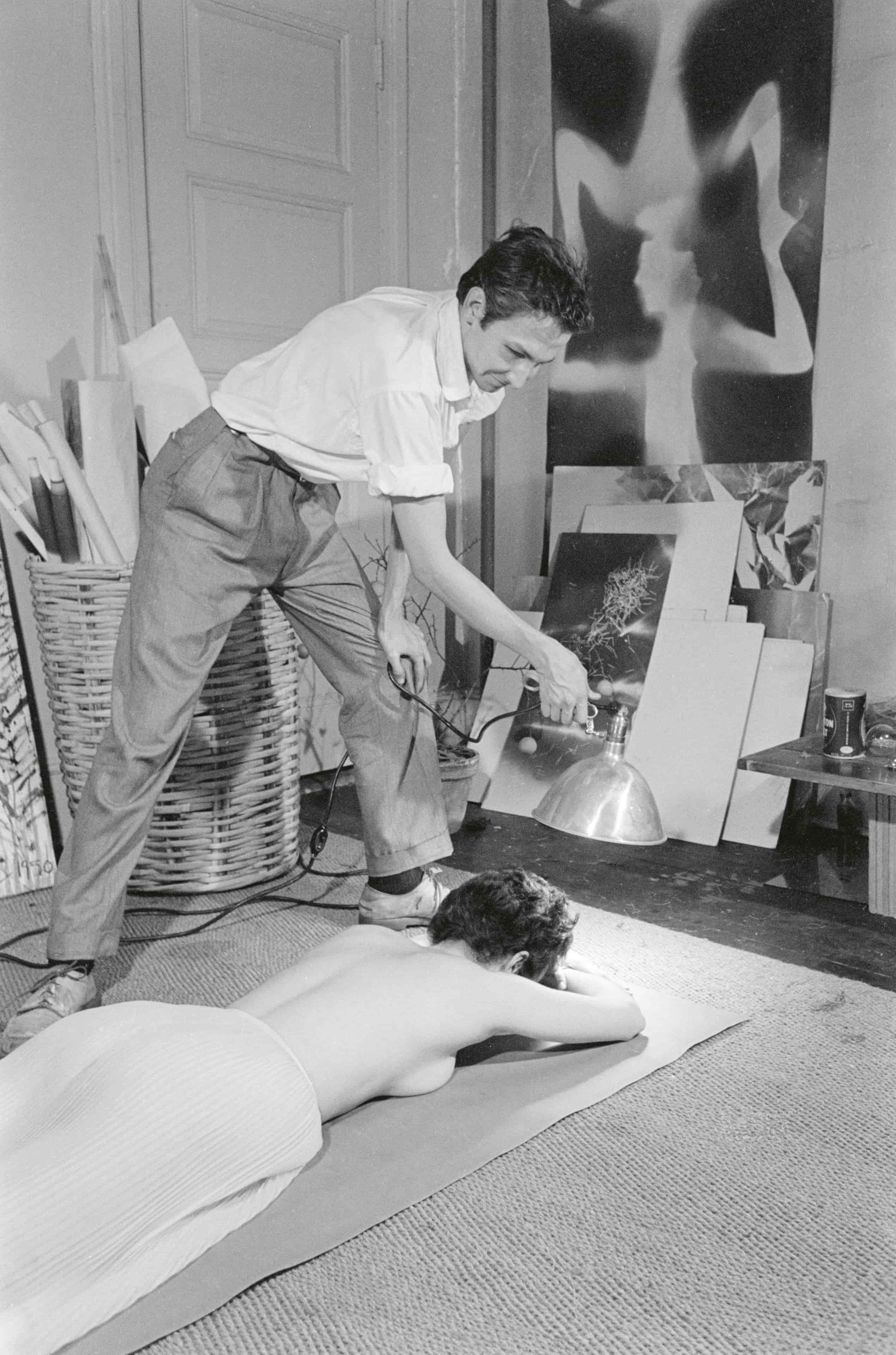
Fig. 12. Robert Rauschenberg with an unidentified model demonstrating the cyanotype-making process for Life photographer Wallace Kirkland, 6 West 95th Street, New York, February 1951
January 1–March 31: Attends Vytlacil’s morning and Kantor’s afternoon classes at ASL.
January 9–21: Included in the juried Emily Lowe Award exhibition at Ward Eggleston Galleries, New York.35
June 21: Marries Weil on Outer Island. Rauschenberg’s parents and sister, Janet, attend, along with Pat Pearman. Janet is the maid of honor, and Donald Droll, a friend of Weil’s from Black Mountain, is the best man. Weil’s parents’ wedding gift to the couple is an etching by Matisse. The couple honeymoon in Bermuda.
August 12–13: Attends the third American Dance Festival at Connecticut College in New London to see performances by Merce Cunningham (1919–2009), who is accompanied on piano by the composer John Cage (1912–1992).36
September: Submits the sculpture Greenhouse (11) to the juried Twelfth Texas Annual Painting and Sculpture Exhibition, organized by the Dallas Museum of Fine Arts. The sculpture is not selected for the October exhibition.
[Fall]: Rents a ground-floor apartment with Weil at 6 West 95th Street, New York. The apartment, which opens onto a small backyard, also serves as their studio. There, in addition to their own paintings and sculptures, they create large, collaborative cyanotypes using themselves and their friends—including Pat Pearman, now living in New York—as models.
October 16–November 4: Sees the first solo exhibition of the work of Franz Kline (1910–1962) at Charles Egan Gallery, New York. Rauschenberg later remembers, “The door was open. It was after dark, and there was no one there. These black-and-white apparitions were vibrating on the wall.”37
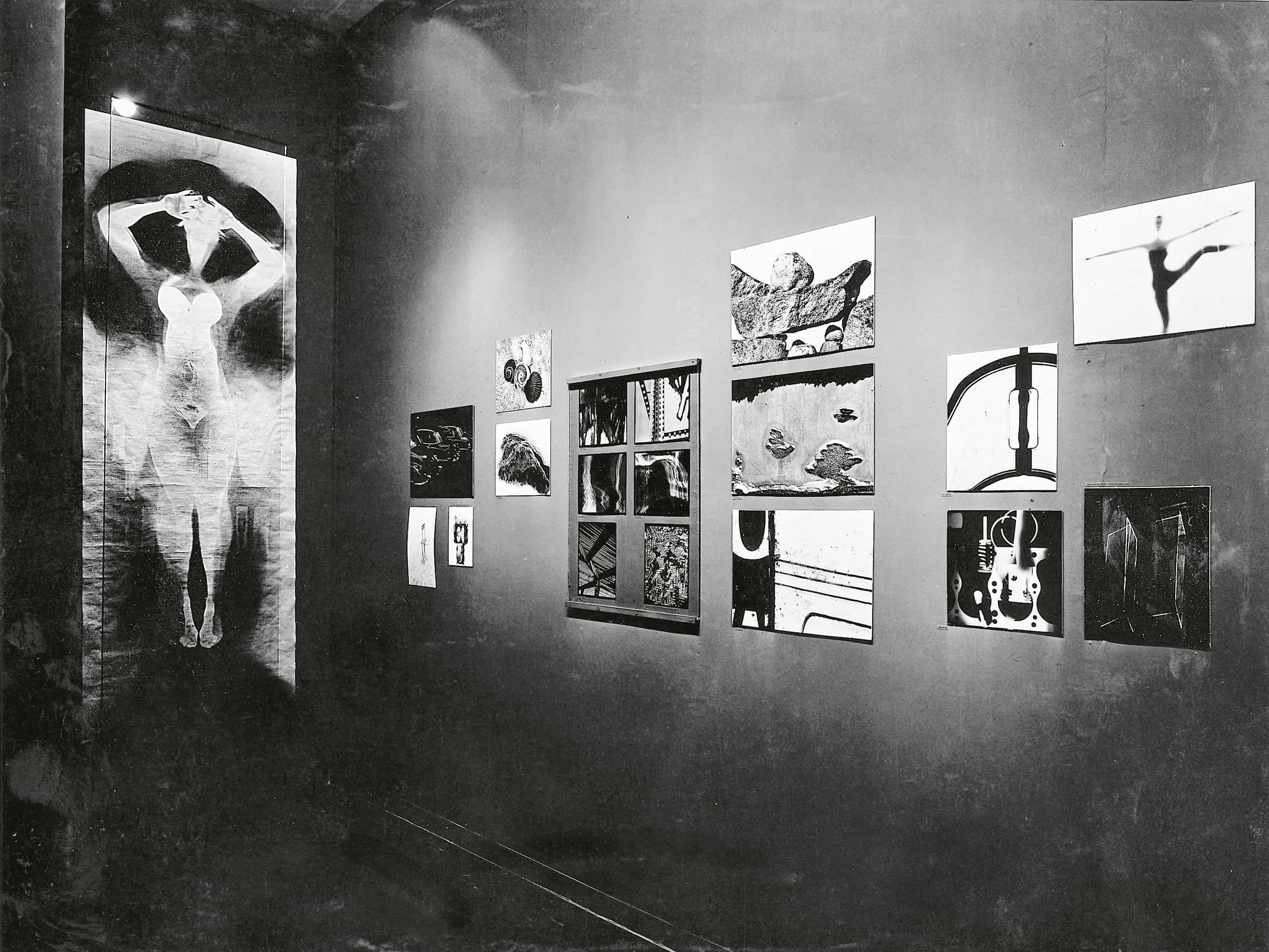
Fig. 13. Installation view of Abstraction in Photography (The Museum of Modern Art, New York, May 2–July 4, 1951) with Female Figure (ca. 1950), by Robert Rauschenberg and Susan Weil, at far left
January 2–February 3: Sees work by Marcel Duchamp (1887–1968) for the first time when Bicycle Wheel (1913; remade 1951) is included in the exhibition Climax in 20th Century Art, 1913 at Sidney Janis Gallery, New York.38
February 1–April 30: Attends ASL for the spring semester. Takes afternoon and evening classes with Kantor and, in the afternoon class, meets Edwin Parker Twombly, Jr. (1928–2011), known as Cy, a scholarship student from Lexington, Virginia, who has previously studied at the School of the Museum of Fine Arts, Boston, and Washington and Lee University in Lexington.
February: With Weil’s help, carries six of his paintings from ASL to Betty Parsons Gallery on 57th Street and asks for a critique of his work. Betty Parsons (1900–1982), who represents artists such as Barnett Newman, Jackson Pollock, and Mark Rothko, unexpectedly offers him an exhibition. Several weeks later, she visits the couple’s apartment to select works for the show, accompanied by another artist she represents, Clyfford Still (1904–1980).39
[February 18–25]: Wallace Kirkland of Life magazine photographs Rauschenberg and Weil making cyanotypes in their apartment.40
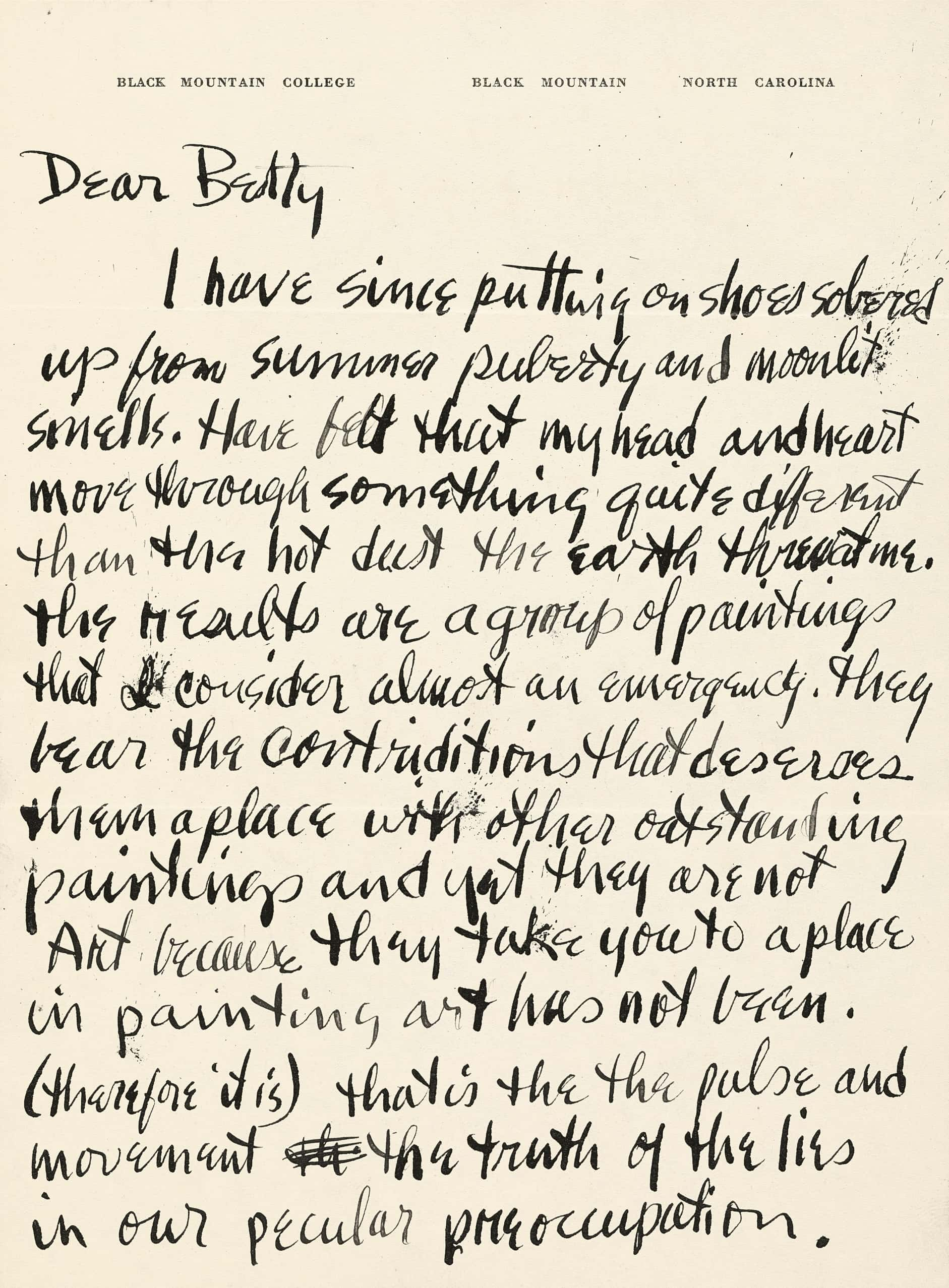
Fig. 14. Page of a letter from Robert Rauschenberg to Betty Parsons concerning the White Paintings, postmarked October 18, 1951
April 9: “Speaking of Pictures: Blueprint Paper, Sun Lamp, a Nude Produce Some Vaporous Fantasies” is published in Life magazine. The three-page article, which includes black-and-white photographs of the couple and shows their cyanotypes in color, notes that “although the Rauschenbergs make blueprints for fun, they hope to turn them into screen and wallpaper designs.”41
May: Takes a class in painting composition at ASL, taught by the artist Charles Alston (1907–1977).
Approaches Alexander Liberman and Alexey Brodovitch, the editors of Vogue and Harper’s Bazaar, respectively, seeking commercial outlets for his and Weil’s cyanotypes. Brodovitch expresses interest in them for Portfolio, his innovative ad-free magazine. The couple create a suite of miniature versions of their larger cyanotypes intended for a loose insert in the magazine, but Portfolio folds before the piece can appear.42
May 2–July 4: The exhibition Abstraction in Photography at the Museum of Modern Art, New York, curated by Edward Steichen (1879–1978), includes Blueprint: Photogram for Mural Decoration (now titled Female Figure), by Rauschenberg and Weil.43 It is the first museum show for either artist.
May 7: Writes a letter of recommendation in support of Twombly’s application to Black Mountain College’s summer session: “Si [sic] is already very familiar with Black Mountain’s way of life and has been exposed to legends, facts, dreams and reality, brutally by those who love both.”44
Before May 14: Aaron Siskind (1903–1991) photographs four paintings by Rauschenberg in advance of the artist’s exhibition at Betty Parsons Gallery.45
May 14–June 2: Paintings by Bob Rauschenberg, the artist’s first solo exhibition, is presented at Betty Parsons Gallery. Paintings by Walter Tandy Murch (1907–1967) are shown in the main space, while Rauschenberg’s are in the gallery’s smaller room.46 To Parsons’s surprise, Rauschenberg has repainted many of the works she and Still originally selected.47 None of the paintings sell, but Rauschenberg gives No. 1–1951 (15) to Cage after the composer visits the exhibition. The sculptor Philip Pavia (1911–2005) and the painter Jack Tworkov (1900–1982) also see the show and invite Rauschenberg to participate in a group exhibition opening imminently in Greenwich Village.48
May 21–June 10: Shows 22 The Lily White (14) in 9th St. Exhibition of Paintings and Sculpture (known as the “9th Street Show”), removing it from the Parsons show to do so. Organized by members of the downtown artists’ association known as “The Club” (including Pavia and Tworkov), the exhibition features more than sixty artists in an empty storefront at 60 East 9th Street. Rauschenberg meets Leo Castelli (1907–1999) for the first time at the exhibition; Castelli, an art dealer and member of the Club, has paid to rent the space and produce the exhibition posters.49
July 16: Rauschenberg and Weil’s son, Christopher, is born in New York.
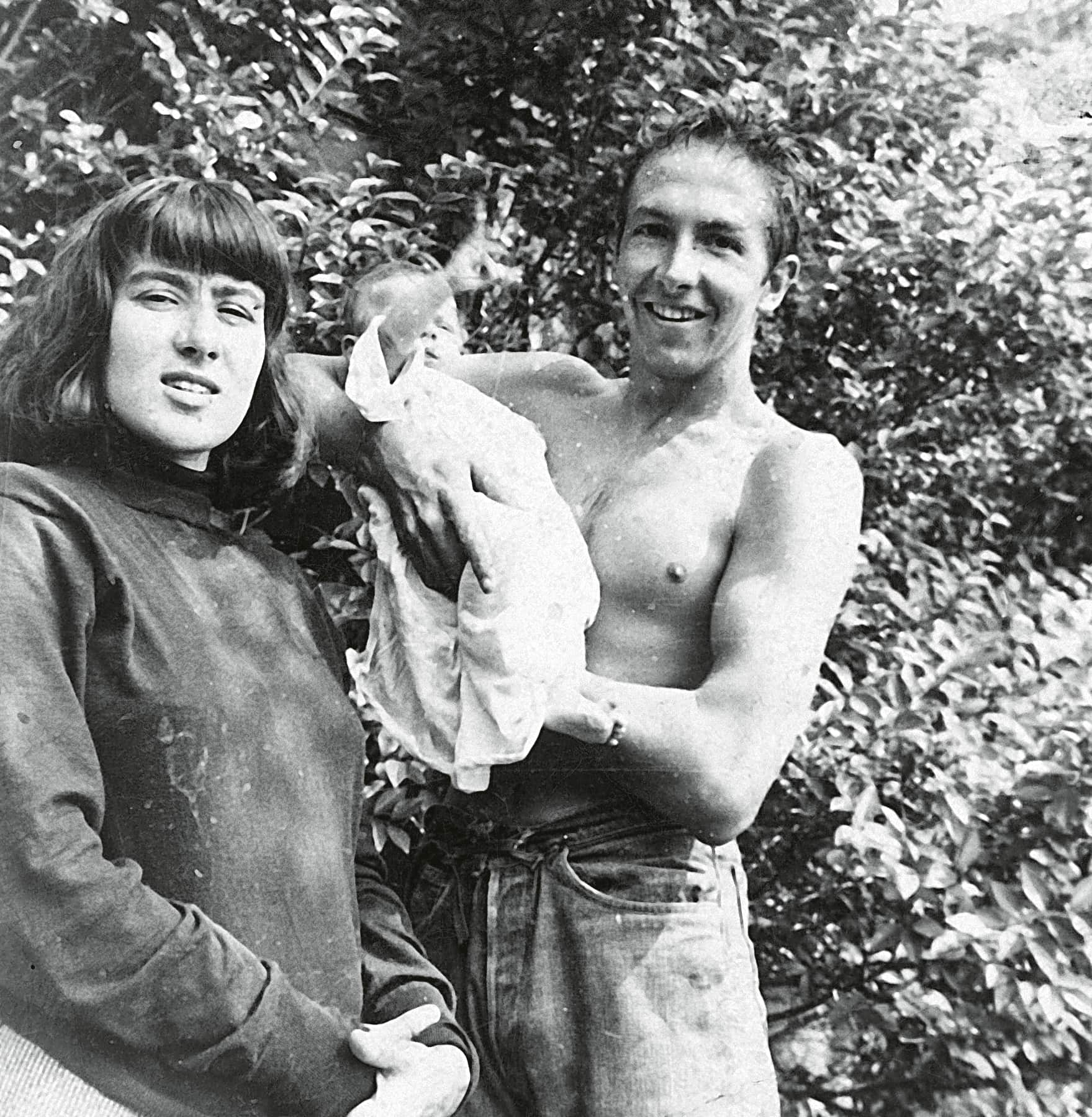
Fig. 15. Susan Weil, Robert Rauschenberg, and their infant son, Christopher, 1951
July 25–August 31: Attends the summer session at Black Mountain College, having missed the first two weeks of class. Weil and Christopher follow soon after Rauschenberg arrives. Visiting professors include the painters Ben Shahn (1898–1969) in July and Robert Motherwell (1915–1991) in August, along with Siskind, the photographer Harry Callahan, and the composer Lou Harrison. Rauschenberg is enrolled in Shahn’s and Motherwell’s painting tutorials. Fellow students at the college include Twombly, Nicholas Cernovitch, Fielding Dawson, Suzi Gablik, and Joel Oppenheimer.
Paints the Night Blooming series.
While at Black Mountain, Weil recognizes that Rauschenberg and Twombly are having an affair.
[August 31–September 23]: Rauschenberg, Weil, and Christopher go to Outer Island, accompanied by Twombly. Rauschenberg also spends time in New York; on one occasion, he meets with Gene Moore (1910–1998), display manager for the department store Bonwit Teller, about using his and Weil’s cyanotypes in window displays.
September 24, 1951–February 2, 1952: Attends the fall term at Black Mountain over Weil’s objections. She and Christopher remain in New York. Rauschenberg is enrolled in three courses: photography with Hazel-Frieda Larsen, Russian with Anna Goldowski, and a painting tutorial. He conceives of a project to photograph the United States inch by inch, an idea he soon recognizes as impractical.50
Begins two series, the White Paintings and the Black Paintings, and works on them simultaneously.
Makes his first woodcuts, including This Is the First Half of a Print Designed to Exist in Passing Time (37), in the college print shop.51
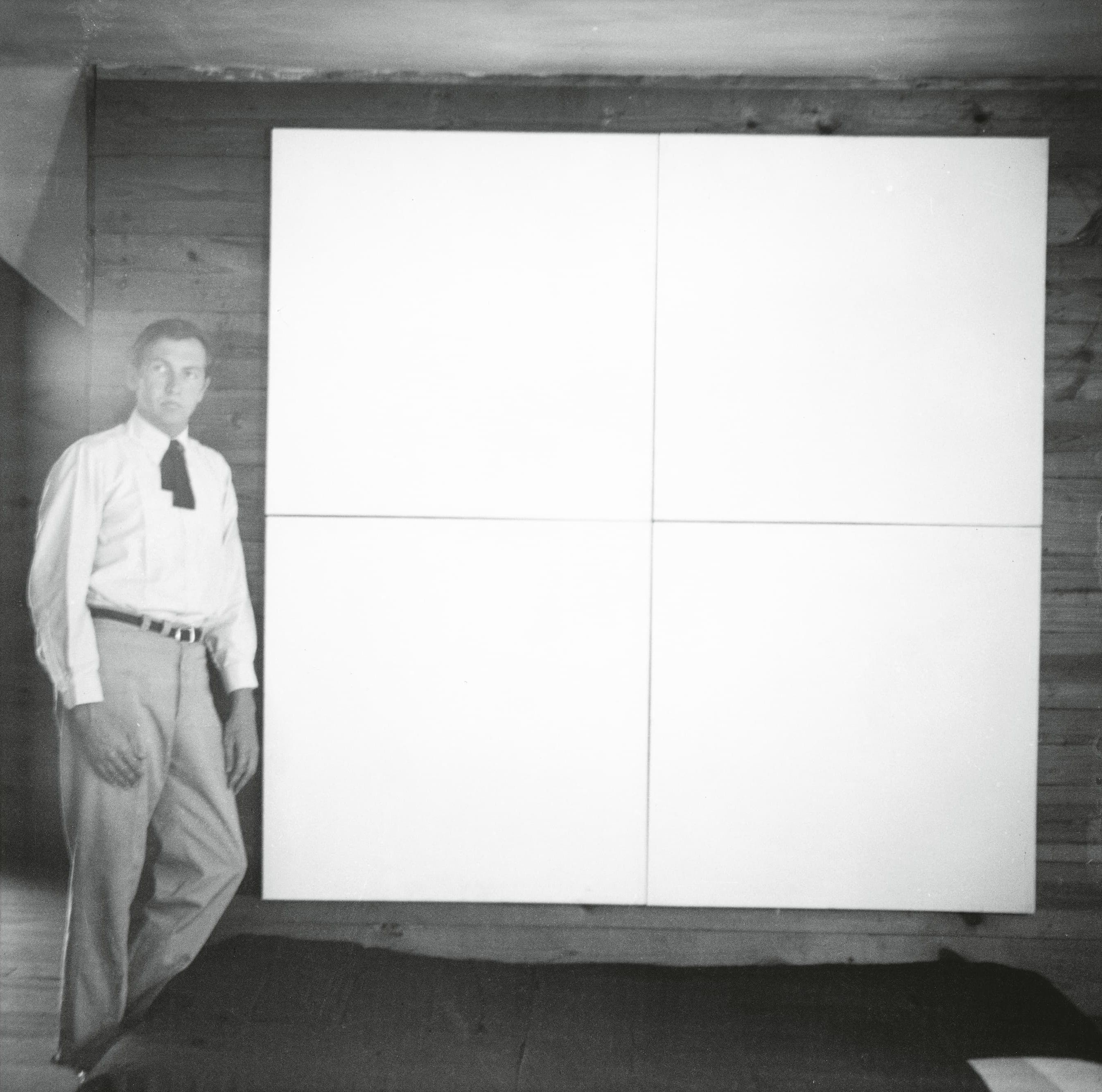
Fig. 16. Robert Rauschenberg standing beside White Painting (35) at Black Mountain College, N.C., ca. 1951
October 18: Writes an impassioned letter to Parsons about the White Paintings, describing them as “a group of paintings that I consider almost an emergency. … They are not art because they take you to a place in painting art has not been. … I will be in N.Y. Nov. 1st and will forfeit all right to ever show again for their being given a chance to be considered for this year’s calendar.”52
[November 1]: Drives from Black Mountain to New York to show Betty Parsons four examples of his recent White Paintings and Black Paintings.53
December 4: Twombly’s first New York exhibition opens at Kootz Gallery.54 To be able to attend, he and Rauschenberg have left Black Mountain several days before the official start of the holiday break (December 8).
[December 12]: Photographs the exhibition Jackson Pollock at Betty Parsons Gallery, in which Pollock (1912–1956) is showing his new black-enamel paintings.
[Late December]: Visits his family in Lafayette for Christmas.
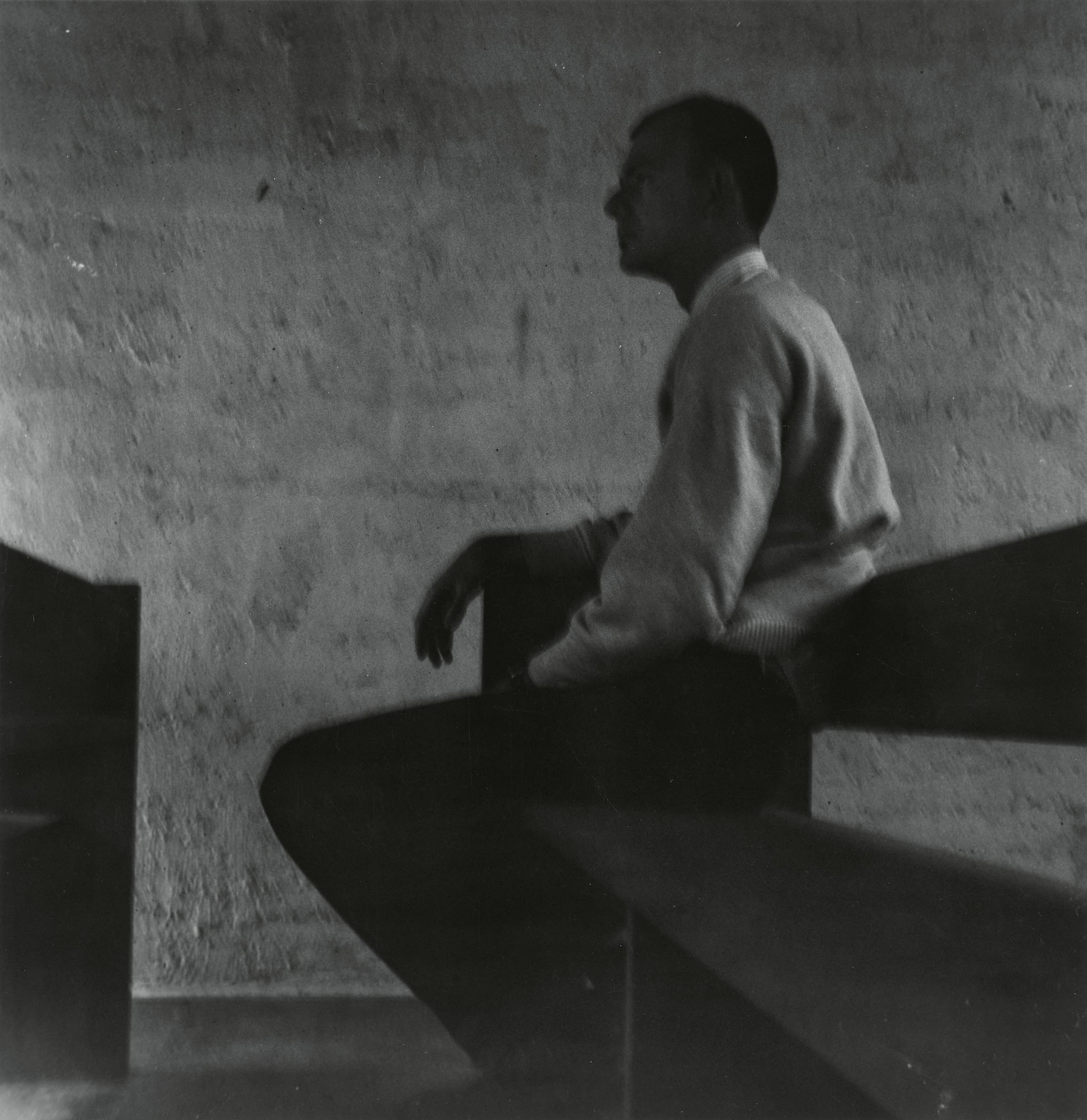
Fig. 17. Robert Rauschenberg, Cy Twombly, 1951. Gelatin silver print; 10⅛ × 9⅞ in. (25.7 × 25.1 cm). The Museum of Modern Art, New York
January: Assists Nicholas Cernovitch (1929–2018) in cutting the woodblocks for “The Song of the Border Guard,” a broadside featuring a poem by Robert Duncan (1919–1988) and a design by Twombly.55
February 7: Weil files to divorce Rauschenberg.
February 11–June 7: Attends the spring term at Black Mountain, where he takes the same three classes as in the fall.
[February]: Rauschenberg and Weil’s cyanotypes appear in Bonwit Teller’s windows at Fifth Avenue and 56th Street, New York.56
March 29–April 14: Visits New York during Black Mountain’s spring break.57 It is likely during this time that Rauschenberg and Twombly visit Tworkov’s studio at 85 Fourth Avenue and Rauschenberg sneaks across the hall into the studio of Willem de Kooning (1904–1997). There, he photographs early states of Woman II (1952) and Woman III (1953) and takes a drawing from de Kooning’s trash.58
April 12: Rauschenberg and Weil’s divorce is finalized.
May 12–June 14: One of the Night Blooming paintings, No. 10–1951, now designated Untitled (30), is included in a group exhibition at Betty Parsons Gallery.59
May 26: Twombly receives a traveling fellowship of $1,800 from the Virginia Museum of Fine Arts, Richmond, which he plans to use to visit Europe. He invites Rauschenberg to accompany him.
June 11: Sells two photographs to Edward Steichen for the Museum of Modern Art, New York; one depicts the interior of a horse-drawn carriage, and the other, Twombly sitting on a bench in the Quiet House at Black Mountain College.60 They are Rauschenberg’s first works to be acquired by a museum.
June 25–August 19: Attends the summer session at Black Mountain, where he is enrolled in a single course: voice with Johanna Jalowetz. Visiting faculty include Tworkov in July and Kline in August, both of whom Rauschenberg already knows from New York. Cage and Cunningham arrive by July 28 and remain for the rest of the session.
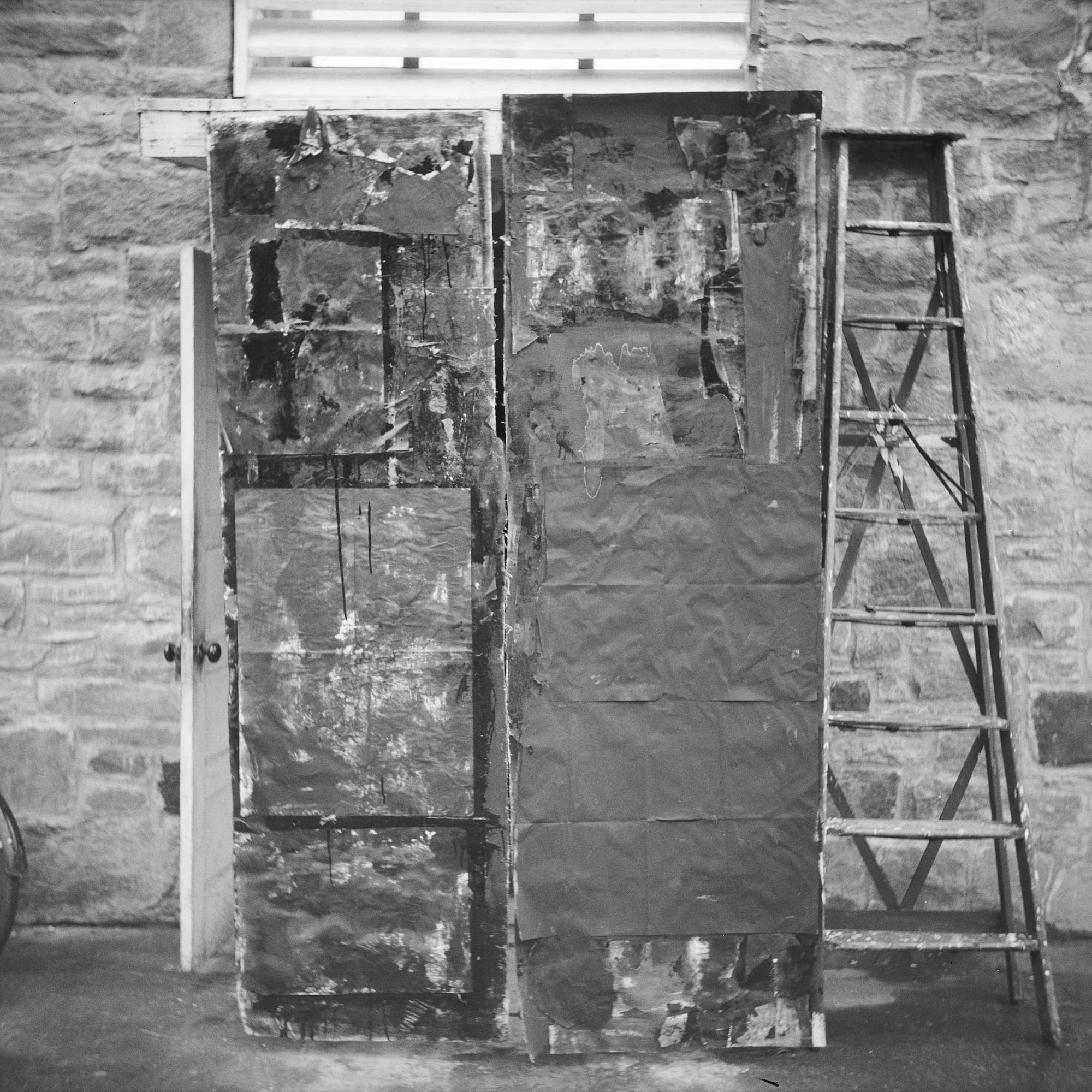
Fig. 18. Early states of two panels of Black Painting (87) outside the Studies Building, Black Mountain College, N.C., 1952. Photograph by Robert Rauschenberg
With Twombly, stages a performance of scenes from Shakespeare’s Hamlet, which they have rewritten. The artist Dorothea Rockburne (b. 1932) appears as Ophelia on a raft in Lake Eden, in the center of campus, with her hair floating on the surface of the water.61
August 3: Participates in a performance organized by Cage, later given the title Theater Piece No. 1, in Black Mountain’s dining hall. Rauschenberg plays wax cylinders on a hand-cranked Edison phonograph.62 At least one of his White Paintings is on view during the performance.63 Other participants are Cage himself, Charles Olson, and M. C. Richards, reading texts; David Tudor, playing the piano; and one or more students projecting films or slides.64
August 10: Paintings by Robert Rauschenberg, featuring the artist’s recent Black Paintings, is presented at Black Mountain.65 Cage later recalls that Kline was “sure they were great paintings because he felt absolutely—we could never remember whether he said ‘helpless’ or ‘hopeless’ in front of them.”66
August 20: Embarks for Italy from New York with Twombly aboard the SS Argentina, arriving in Palermo, Sicily, on August 31.
August 23: Fire consumes the Weil home on Outer Island. Susan Weil and Christopher Rauschenberg are there with the gallerist Charles Egan (1914–1993), his wife, Teresa, and their newborn son. All escape without injury. Rauschenberg’s works stored in the house are destroyed, including an early glass sculpture (12) and paintings from his 1951 Betty Parsons exhibition.67
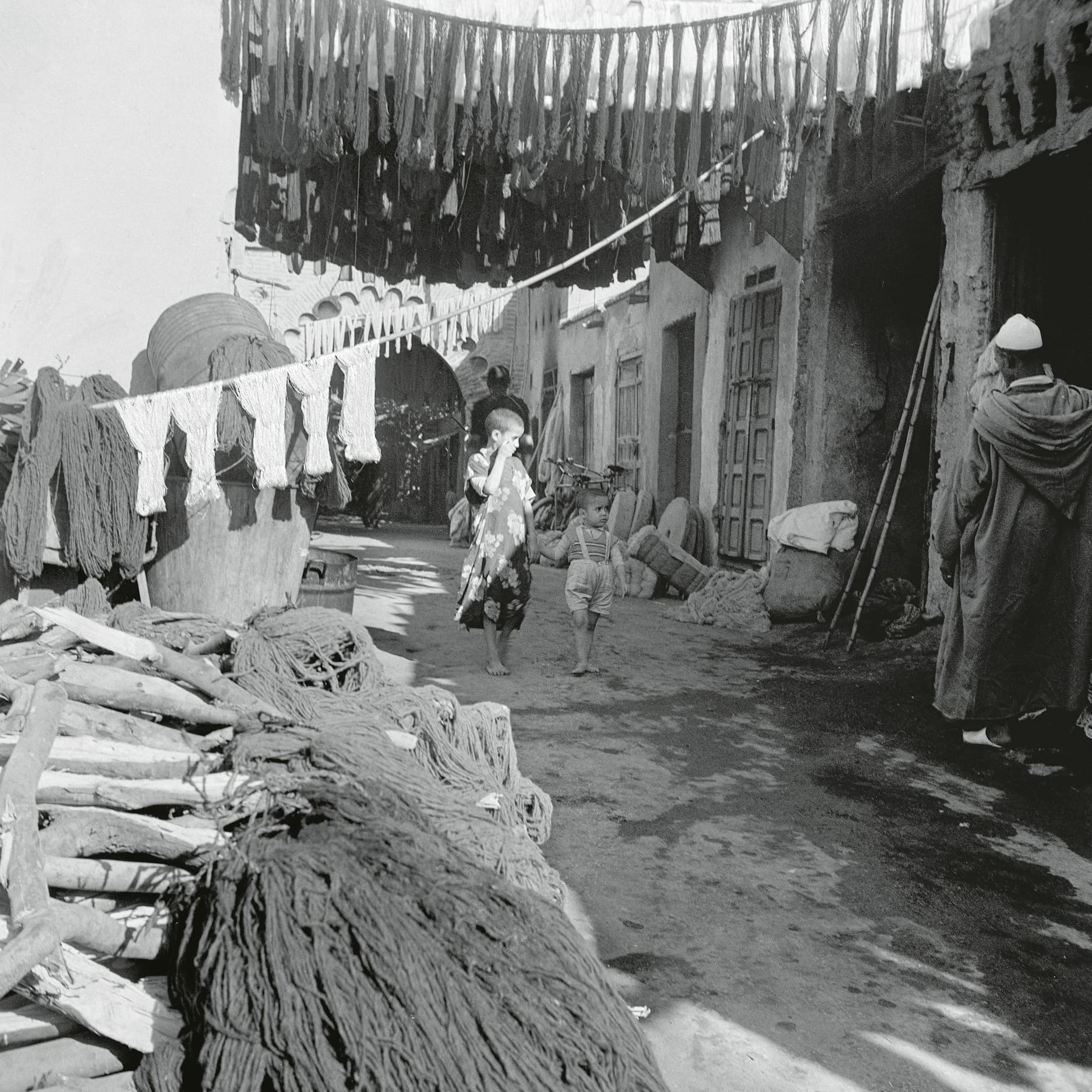
Fig. 19. Souk des Teinturiers (Souk Sebbaghine), Marrakech, fall 1952. Photograph by Robert Rauschenberg
September 6: Arrives in Rome with Twombly after spending several days in Palermo and Naples.68 They choose to live near via Margutta, where many Italian artists, including Alberto Burri, keep studios.
With Twombly, spends a week in Florence and travels to Assisi, Perugia, and Siena.69
October: Realizing that Twombly’s fellowship will not support them both for long, flies to Casablanca to look for work with Atlas Constructors, an American corporation building five U.S. Air Force bases in French Morocco.70 He is hired at a salary of four hundred dollars a month to work in a warehouse conducting what he later describes as “perpetual inventory.”71
Late October: Quits his job of two and a half weeks when Twombly joins him in Casablanca.72 The pair travel south through the Atlas Mountains to Marrakech and Ouarzazate, on the edge of the Sahara Desert.73 While in Morocco, they both take photographs with Rauschenberg’s Rolleicord camera. Rauschenberg begins to collect the materials from which he will assemble the Scatole e Feticci Personali sculptures.
November 3: Travels to Tangier with Twombly.74 Later in the month, when Twombly takes a side trip to an archaeological site, Rauschenberg likely accompanies him.
December: Having returned to Tangier, meets the American expatriate writer and composer Paul Bowles (1910–1999), whom he and Twombly have looked up at de Kooning’s suggestion.75
December 6: Departs Tangier for Tétouan in Spanish Morocco, where he and Twombly stay at the Hôtel Bilbao.
Bowles and the artist Ahmed Yacoubi (1928–1985), who exhibited in April 1952 in New York at Betty Parsons Gallery,76 join Rauschenberg and Twombly in Tétouan. Bowles, who has a Rolls-Royce and a personal driver, invites the younger Americans on frequent excursions.77
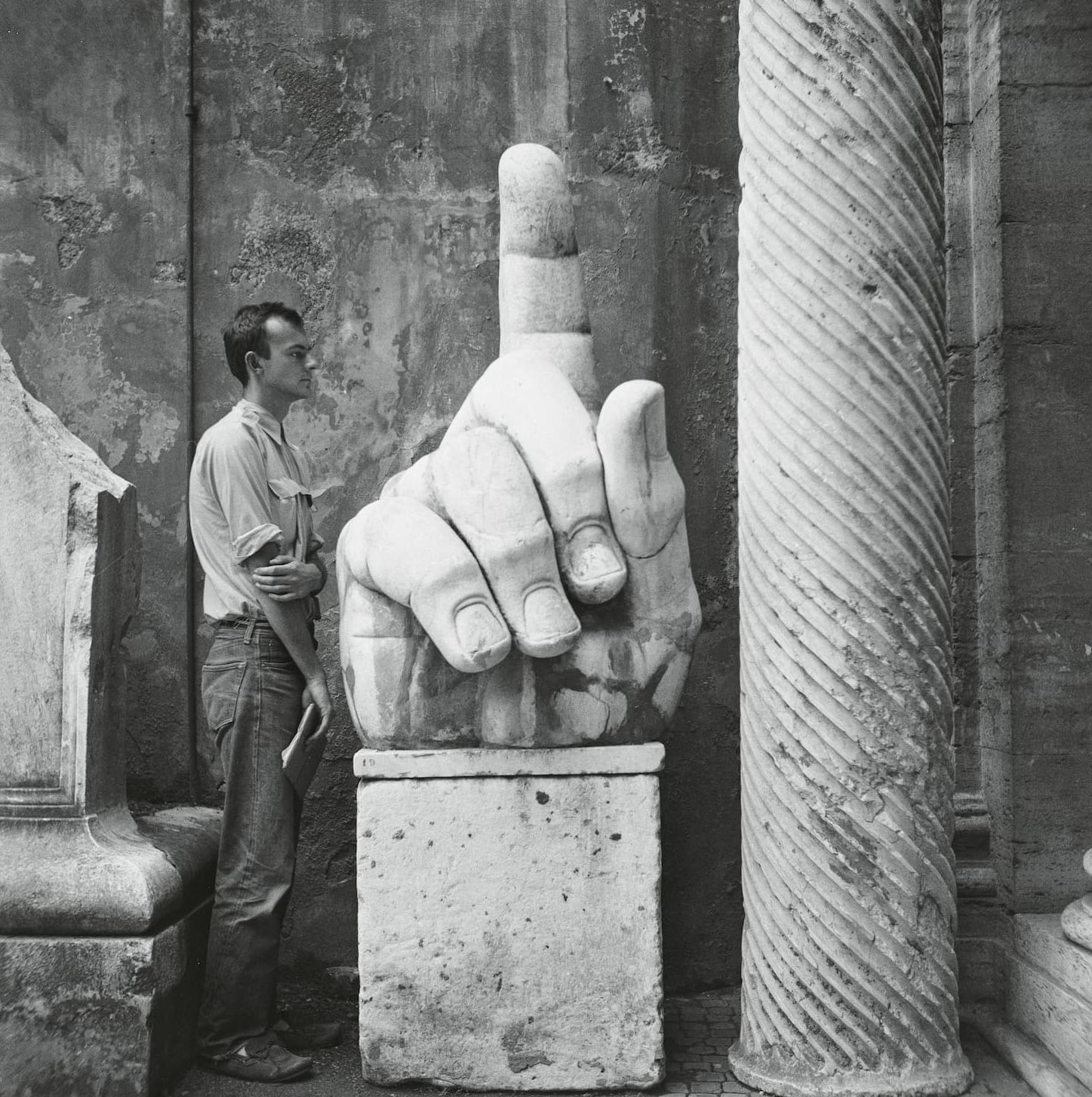
Fig. 20. Cy Twombly standing beside the marble hand of Constantine at the Musei Capitolini, Rome, ca. 1952. Photograph by Robert Rauschenberg
[January]: Travels to Spain with Twombly, visiting Madrid, Toledo, and Barcelona before returning to Rome.78
January 11–February 7: Included in Second Annual Exhibition of Painting and Sculpture, successor to the 9th Street Show of 1951, at Stable Gallery, New York, founded by Eleanor Ward (1909–1984) in December 1952. (This show would recur every year through 1957 and become known, familiarly, as the “Stable Annual.”) One of Rauschenberg’s Black Paintings is submitted to the exhibition by Tworkov, who has been storing it.79
By February 7: Returns with Twombly to Rome, where they rent a room at the Pensione Lago di Alleghe, on Piazza di Spagna.80
February: Visits the artist Alberto Burri (1915–1995) in his studio in Rome, then visits again after learning that Burri is ill. Later recalls, “I was doing fetishes and immediately concocted and delivered a healing work for [Burri].”81 This get-well gift was a small box described by Burri as containing “sand and a dead fly.”82 Shortly after, Burri gives Rauschenberg an untitled miniature painting collaged with fabric.83
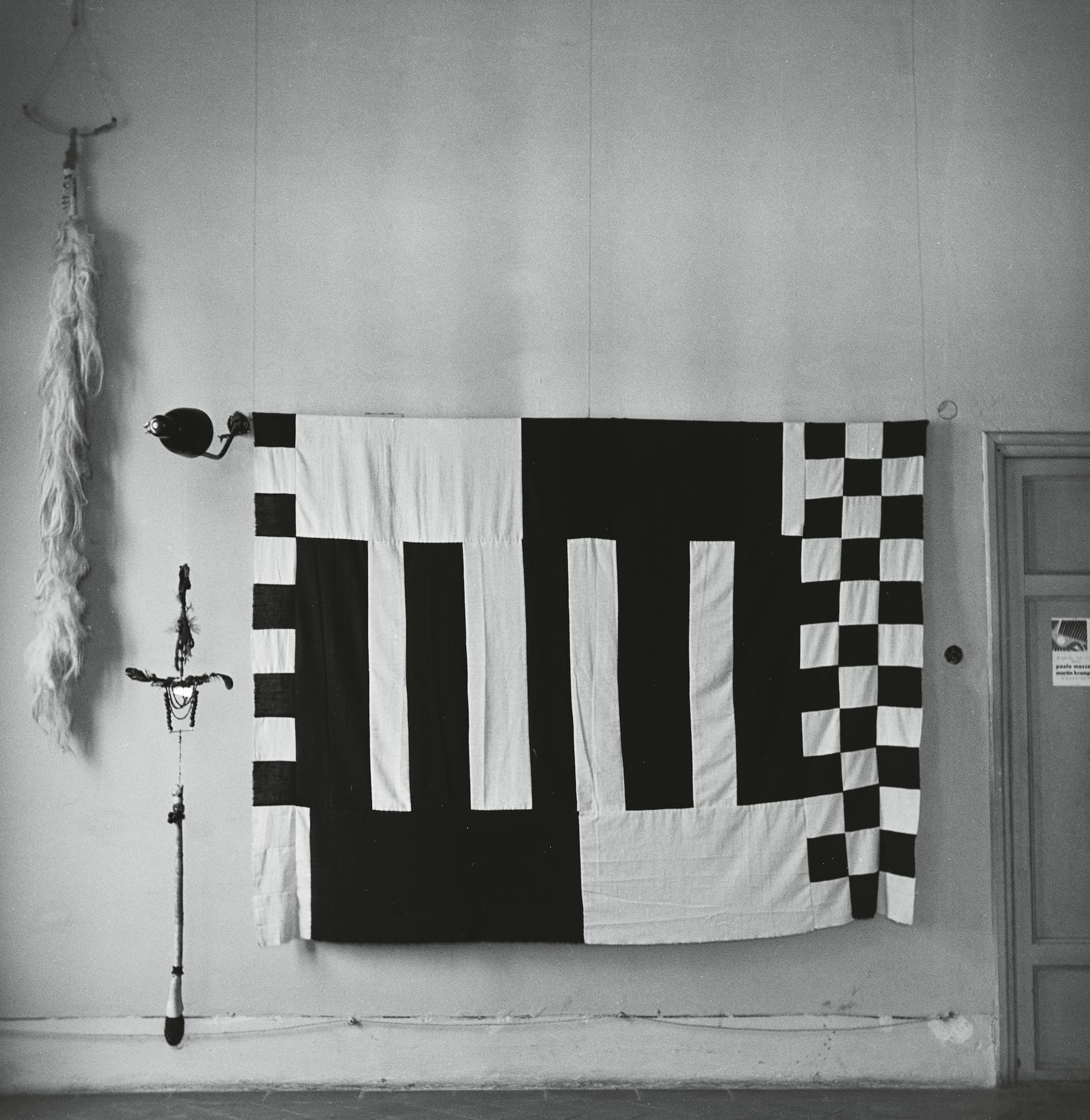
Fig. 21. Installation view of Scatole e costruzioni contemplative di Bob Rauschenberg and Mostra di arazzi di Cy Twombly (Galleria d’Arte Contemporanea, Florence, opened March 14, 1953). Works shown (left to right): Untitled (Scatole e Feticci Personali) (75), Untitled (Scatole e Feticci Personali) (74), tapestry by Cy Twombly. Photograph by Robert Rauschenberg
Walter Auerbach (1908–1966), a photographer and friend of de Kooning’s, photographs Rauschenberg’s Scatole e Feticci Personali sculptures in the pensione and outdoors in the Pincio Gardens, Rome.
March 3–10: Bob Rauschenberg: Scatole e feticci personali, the artist’s first solo exhibition in Europe, is presented at Galleria dell’Obelisco, Rome.
March 14: The concurrent exhibitions Scatole e costruzioni contemplative di Bob Rauschenberg and Mostra di arazzi di Cy Twombly open at Galleria d’Arte Contemporanea, Florence. Rauschenberg photographs the exhibition, and two of his works are sold to a local collector.84 The exhibition is covered widely in the local press, most notably by Carlo Volpe in Il nuovo Corriere, who says that “it would have been good fun … to fling that whole curse into the Arno.”85 Rauschenberg later claims to have followed the critic’s advice.86
Late March: Travels with Twombly to Venice and takes photographs, including a double exposure of himself and Twombly on the loggia of the Basilica di San Marco.87
April 3: Sails with Twombly from Naples to New York on the SS Andrea Doria, arriving on April 11.
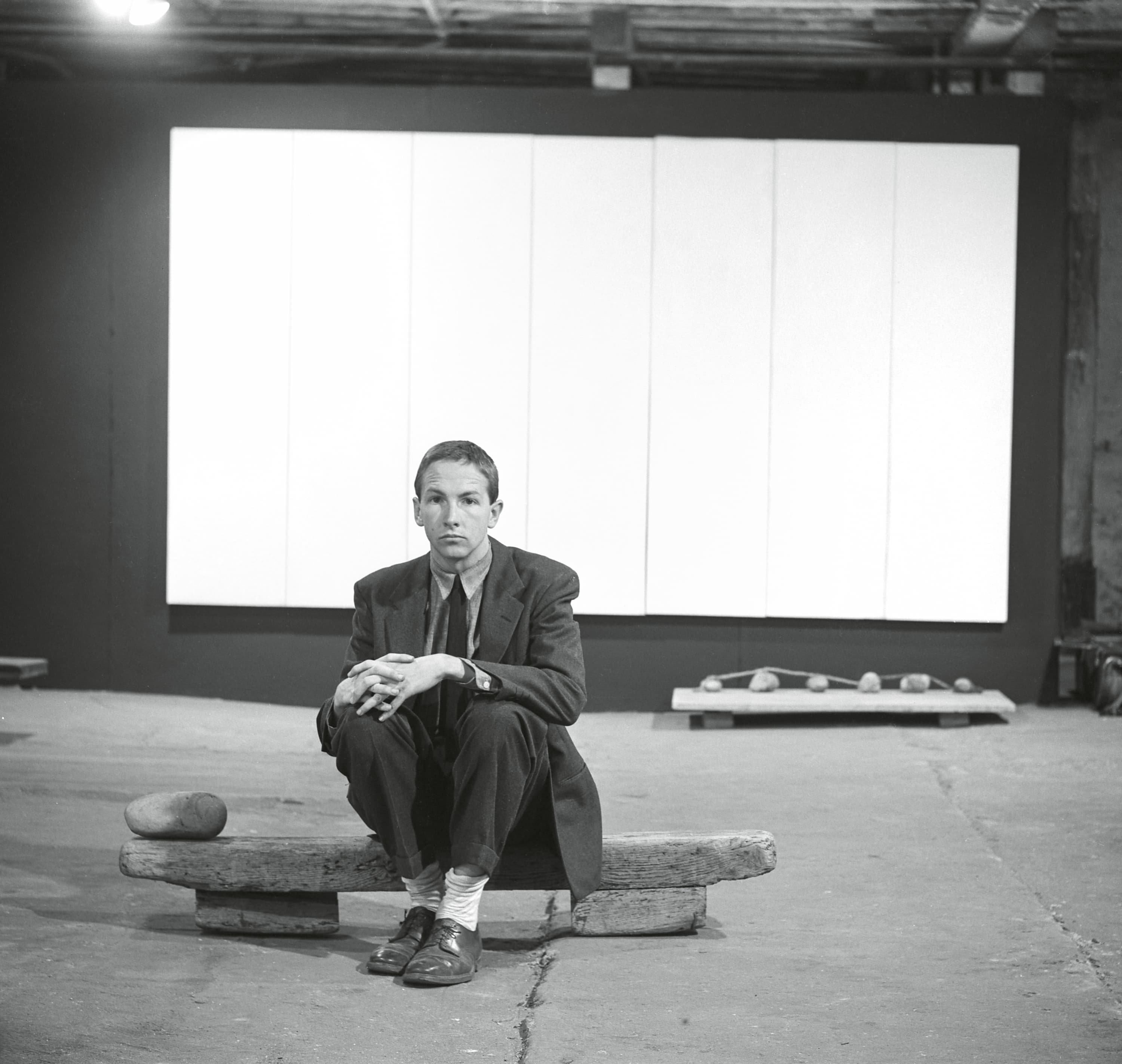
April 15–May 9: Visits the exhibition Dada 1916–1923, curated and installed by Marcel Duchamp, during its run at Sidney Janis Gallery, New York.
April 16: Writes to tell Twombly, who is visiting family, that he has rented the top floor of 61 Fulton Street, a former industrial building without plumbing in Lower Manhattan.88 Twombly soon joins him there.89
Spring–Summer: Retrieves canvases he has stored with Tworkov while overseas. Resumes work on the Black Painting series.
Begins the Elemental Sculpture series, collecting materials for the works from the streets of Lower Manhattan and the Staten Island waterfront.
[Before May 21]: The artist Nicolas Carone (1917–2010) brings Ward to see Twombly’s work at 61 Fulton Street.90 Twombly agrees to an exhibition at Stable Gallery if Rauschenberg’s work is shown as well.
[June]: Hired by Gene Moore to assist with window displays for Bonwit Teller.
Summer: On visiting Ward at Stable Gallery—located in a former horse stable at Seventh Avenue and 58th Street—with Twombly, discovers the basement space and asks if they can use it for their exhibitions. Ward agrees on the condition that they clean it out themselves. They spend much of the summer on the project. Rauschenberg later recalls “pouring a concrete floor and painting the walls.”91
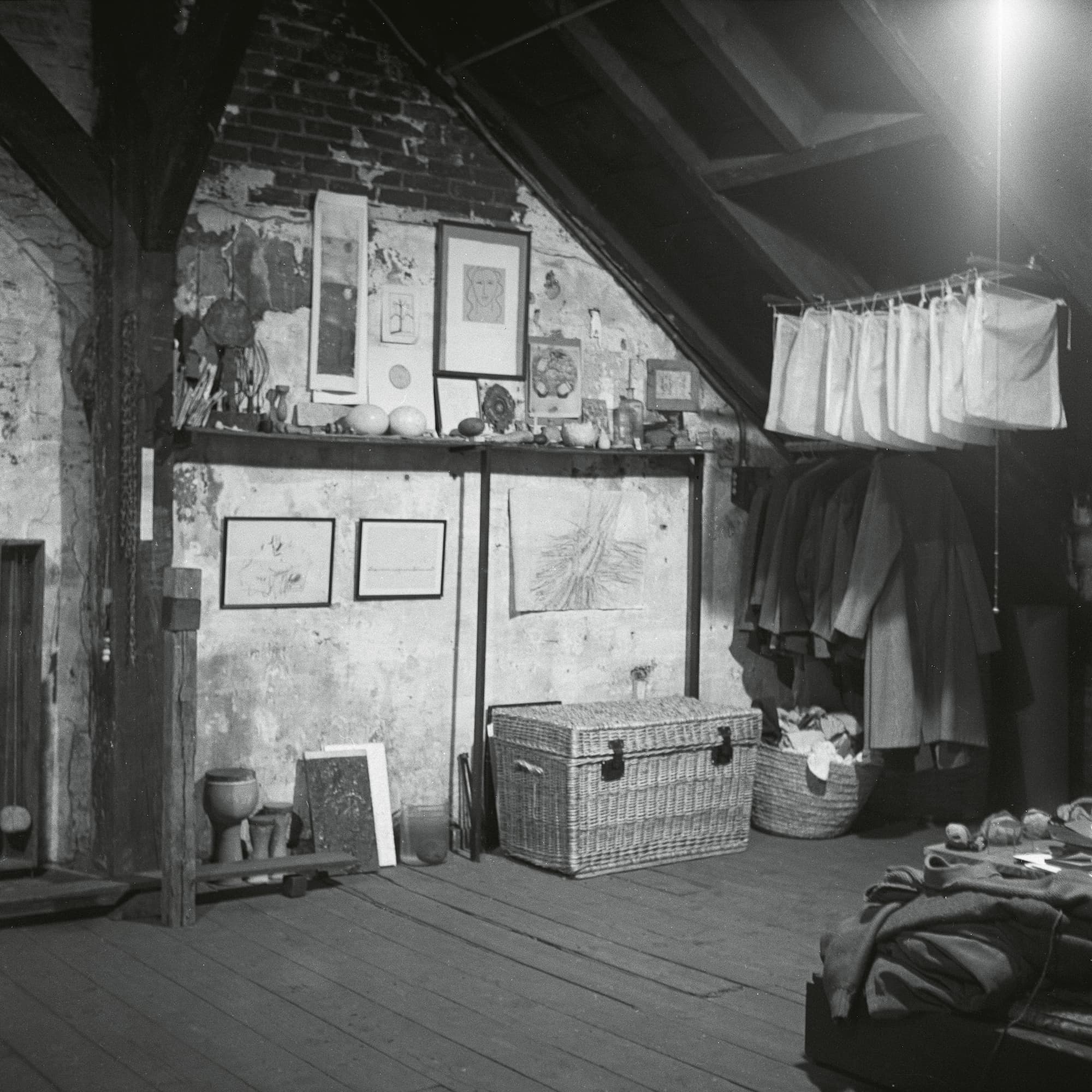
Fig. 23. Robert Rauschenberg’s studio, 61 Fulton Street, New York, ca. 1953–54. Photograph by Robert Rauschenberg
Paints over No. 1–1951 (15)—the work he gave to Cage in 1951—while the composer is out of town.92 Cage is surprised when he returns home to find Black Painting (83) hanging on his wall.
September 15–October 3: Rauschenberg: Paintings and Sculpture and Cy Twombly: Paintings and Drawings are presented concurrently at Stable Gallery, New York. Rauschenberg shows examples of his White Paintings, Black Paintings, and Elemental Sculptures. The critical reception is hostile. To Hubert Crehan of Art Digest, the White Paintings are “beyond the artistic pale”; James Fitzsimmons, in Arts and Architecture, maintains that Rauschenberg “has committed a gratuitously destructive act” in hanging them as art.93 Ward later recalls, “I lost friends over that show. A great many people really thought it was immoral.”94
Duchamp visits the show and meets Rauschenberg, who later recalls, “[Duchamp] picked up one of my sculptures [Music Box (92)]. … I knew who he was, and I was speechless. … He turned the box over, knowing what was going to happen [i.e., that it would make noise]. He said, ‘I think I’ve heard that song.’”95
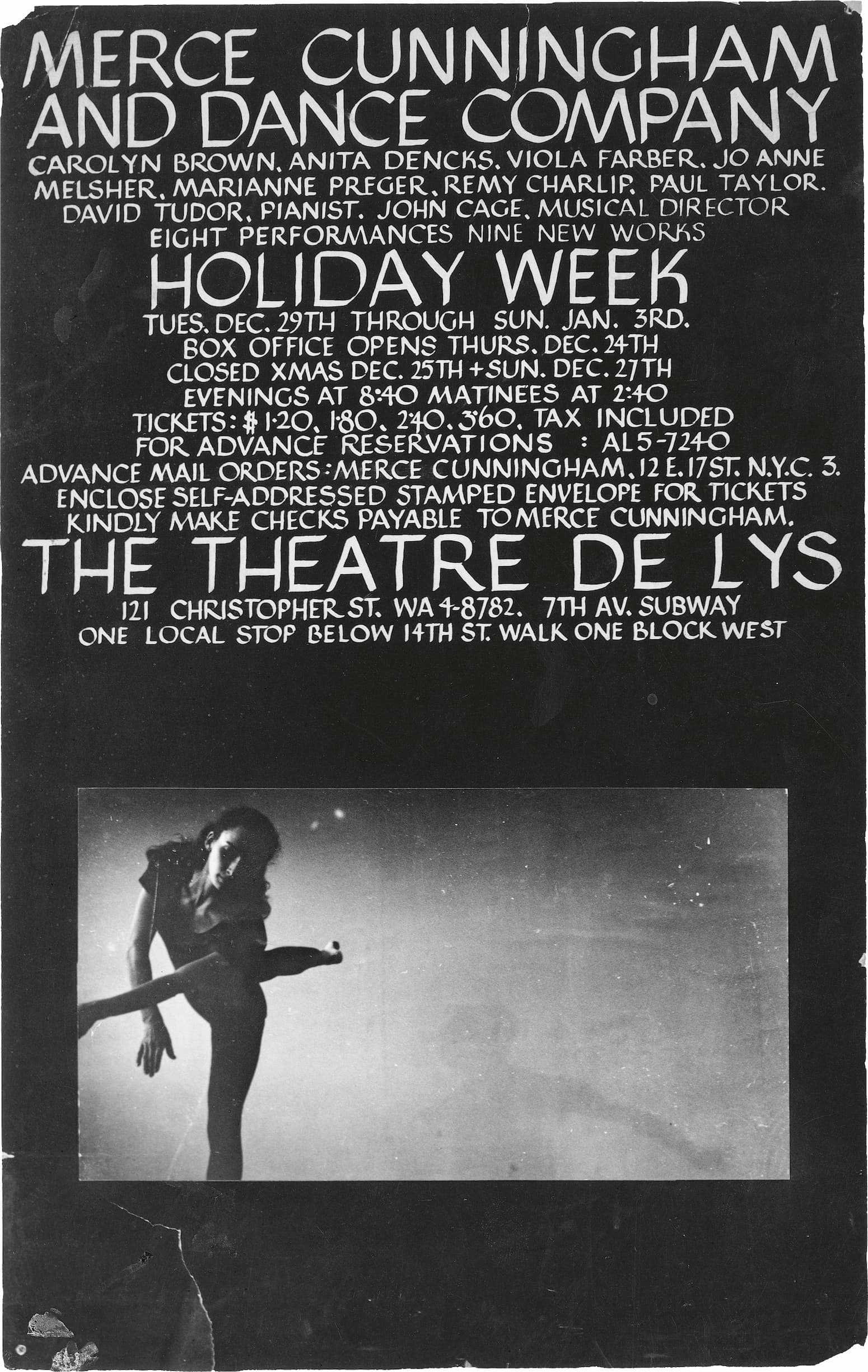
Fig. 24. Poster for Merce Cunningham and Dance Company’s performances at the Theatre de Lys, New York, December 1953–January 1954, featuring a photograph by Robert Rauschenberg. Robert Rauschenberg Papers, Robert Rauschenberg Foundation Archives, New York
Rauschenberg is disappointed that his works are “misunderstood as gestures and anti-paintings,” but the controversy produces a succès de scandale.96 Life magazine sends Allan Grant (1919–2008) to photograph both Rauschenberg and the exhibition and plans an article, but it never appears.
No works are sold by the gallery during the exhibition. However, in the weeks that follow, the artist trades one Black Painting (87) to Cage and Cunningham for a work by Roberto Matta (1911–2002) and sells others (31, 81, 86) to friends for small sums, often no more than what they have in their pockets. This group of friends includes the dancer Carolyn Brown and her husband, the composer Earle Brown; the composer Morton Feldman; and the pianist David Tudor.
Fall: Hired by Ward to hang exhibitions and to work as the janitor at Stable Gallery. Photographs three of the four exhibitions that follow his own: Gaston Bertrand (October 8–31), Alberto Burri (November 23–December 12), and the next Stable Annual (January 27–February 20, 1954).
Creates Automobile Tire Print and Erased de Kooning Drawing (104, 105). Experiments with making paintings from nontraditional materials such as dirt, toilet paper, and gold leaf, the last of which he has obtained from Gene Moore’s workshop.
November: Twombly is drafted into the U.S. Army and sent to Camp Gordon, Georgia, for basic training.
[November 19–26]: Photographs Cunningham’s dance company rehearsing at 224 West 4th Street.97 His image of Carolyn Brown (1927–2025) from these rehearsals is used on a poster advertising upcoming performances at the Theatre de Lys, 121 Christopher Street, New York. When the performances take place (December 29, 1953–January 3, 1954), the artistic collaboration of “Bob Rauschenberg” is acknowledged in the program.98
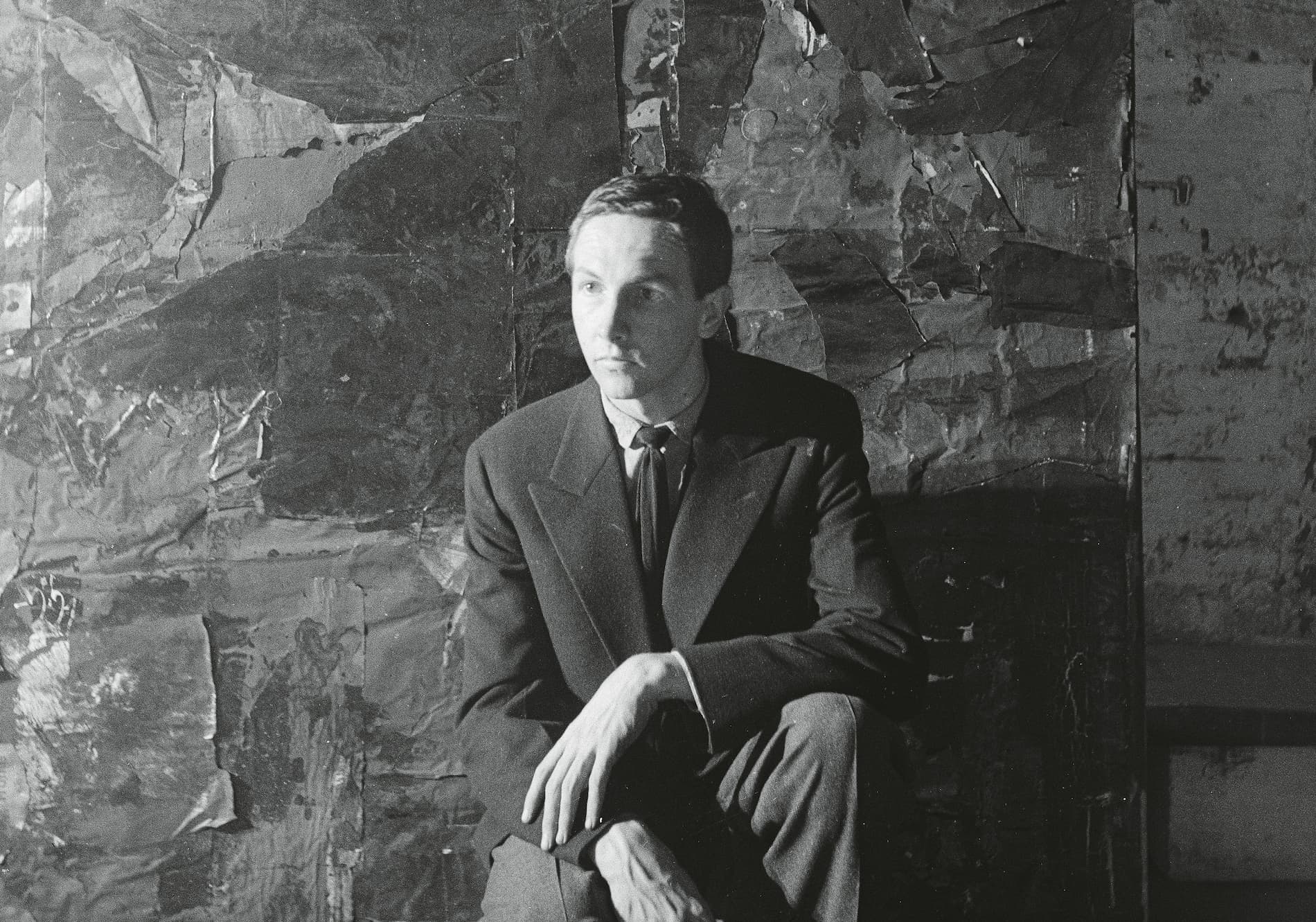
Fig. 25. Robert Rauschenberg in front of Black Painting (82), 61 Fulton Street, New York, ca. 1953
[Winter 1953–54]: Introduced to Jasper Johns (b. 1930) by the artist (later critic) Suzi Gablik (1934–2022) on a street corner near the Marboro Books store on 57th Street, where Johns works. They meet again soon after at a party thrown by the artist Sari Dienes (1898–1992) in her apartment in the Sherwood Studio Building.
[Late December]: Visits his family in Lafayette for Christmas.
December 27: The critic Emily Genauer (1911–2002) devotes her year-end column in the New York Herald Tribune to the White Paintings. It includes a statement by Cage that was available at Stable Gallery during the exhibition, reading, in part, “[N]o subject no image no taste no object / no beauty no message no talent no technique (no why) / no idea no intention no art no feeling / no black no white (no and) / … I have come to the conclusion that there is nothing in these paintings that could not be changed, that they can be seen in any light and are not destroyed by the action of shadows / … Hallelujah! The blind can see again.” Genauer writes, in dissent, “Art must be all the things that John Cage, in his ‘explanation’ of blank pictures, ruled out, including the final, undefined, underscored ‘and.’”99
Rauschenberg’s birth certificate bears the name Milton Ernest. On April 8, 1948, his mother submitted an affidavit to correct his name to Ernest Milton, which is the name that appears in his baby book. The family called him Milton to distinguish him from his father, Ernest. The affidavit postdated his early school registrations and records of military service, where he appears as Milton Ernest. In 1946, when Rauschenberg aspired to establish a design business, he entertained various possibilities for his name, including M. Ernst Rauschenberg, Ernie Rausch, and Ernie Rauschenberg.
⤴Rauschenberg dated this eye exam to when he was first eligible for a driver’s license. Rauschenberg, interview by Walter Hopps and Sue Ginsburg, Nov. 4, 1975, transcript, p. 9, Robert Rauschenberg Papers, RRF Archives.
⤴Ibid.; Jo Ann Eidom, “Gold Adherents Pick Candidates,” Port Arthur News, April 26, 1942, p. 12.
⤴Calvin Tomkins, “Bio notes,” p. 2, Calvin Tomkins Papers, series IV.C, folder 2, MoMA Archives.
⤴As an adult, Rauschenberg self-diagnosed as dyslexic. Dyslexia was first codified by the World Federation of Neurology as a diagnosis in 1968. In 1985, the artist received the Outstanding Learning Disabled Achiever award from First Lady Nancy Reagan for his charitable work on behalf of the Lab School, Washington, D.C.
⤴Rauschenberg to Arthur Frakes, May 13, 1946, FS 173, Frakes Estate, Menil Archives.
⤴Military record of Milton Ernest [Robert] Rauschenberg, National Archives and Records Administration. Reference copy held in RRF Archives.
⤴His departure is recorded as a withdrawal, but Rauschenberg later claimed that his refusal to dissect a frog led to his expulsion. See “Chronology,” in Robert Rauschenberg, exh. cat. (Washington, D.C.: National Collection of Fine Arts, Smithsonian Institution, 1976), p. 25.
⤴Rauschenberg to Arthur Frakes, Sept. 9, 1944, FS 167, Frakes Estate, Menil Archives; Barbara Rose, Rauschenberg (New York: Vintage Books, 1987), p. 17.
⤴Rauschenberg to Arthur Frakes, Oct. 6, 1944, FS 169, Frakes Estate, Menil Archives.
⤴Rauschenberg to Arthur Frakes, Jan. 4, 1945, FS 150, Frakes Estate, Menil Archives.
⤴Calvin Tomkins, untitled notes, n.d. [ca. 1963], pp. 3–4, Calvin Tomkins Papers, series IV.C, folder 2, MoMA Archives.
⤴Robert Hubler was stationed in San Diego beginning on April 5, 1946, overlapping with Rauschenberg until the latter’s discharge on June 6. Paul Hubler, conversation with Susan Davidson, June 24, 2024.
⤴An often repeated story, first told by Calvin Tomkins, has Rauschenberg’s family moving from Port Arthur to Lafayette, Louisiana, in 1946 without informing him, while he was still in the Navy. Calvin Tomkins, “Profiles: Moving Out,” New Yorker 40, no. 2 (Feb. 29, 1964), p. 45. Contemporary documents confirm, however, that the family did not move until April 1948.
⤴See essay by Catherine Craft (n. 112).
⤴Rauschenberg to Dora and Ernest Rauschenberg, Feb. 3, 1947, RFC. Digital reference copy held in RRF Archives.
⤴Ibid. He did not legally change his name to Robert until 1996.
⤴Ibid. This letter to his family is the earliest documented use by Rauschenberg of the name Bob.
⤴Rauschenberg, quoted in Rose, Rauschenberg, p. 21.
⤴Application and recommendation letters in Milton Ernest Rauschenberg file, BMC Records, series 506.4, box 37, Western Regional Archives, State Archives of North Carolina, Asheville; Rauschenberg, interview by Walter Hopps and Sue Ginsburg, Nov. 4, 1975, audio, at 27:41, Audiovisual Collection, RRF Archives.
⤴“In a Color Harmony,” Kansas City Star, Jan. 28, 1948, p. 8.
⤴“Fashion Show Is Gala,” Kansas City Star, May 26, 1948, p. 30.
⤴Janet Begneaud, oral history interview by Sara Sinclair, Jan. 14, 2015, transcript, p. 1-19, Oral History Project, RRF Archives.
⤴“In Society,” Kansas City Star, May 30, 1948, sec. C, p. 9.
⤴The location of the pensione has previously been indicated as “just off the boulevard Raspail” and “on Rue Stanislas, just off Boulevard Raspail.” Tomkins, “Profiles: Moving Out,” p. 48, and Mary Lynn Kotz, Rauschenberg: Art and Life, 3rd ed. (New York: Harry N. Abrams, 2018), p. 61, respectively. The pensione has not been identified.
⤴“Work Program—Fall Semester 1948–49,” BMC Records, series 506.2, box 39, folder 8, Western Regional Archives, State Archives of North Carolina, Asheville.
⤴Rauschenberg later recalled that the costumes prompted Albers’s only compliment of his work. Rauschenberg, audio interview by Hopps and Ginsburg, Nov. 4, 1975, at 30:48.
⤴Course card (drawing), term 2, 1948–49, Milton Ernest Rauschenberg file, BMC Records, series 506.7, box 17, Western Regional Archives, State Archives of North Carolina, Asheville.
⤴Ingeborg Svarc Lauterstein, oral history interview by Mary Emma Harris, Aug. 13, 1995, AC.145, Mary Emma Harris and Black Mountain College Project, Inc. Oral History Collection, Special Collections Research Center, Appalachian State University, Boone, N.C.
⤴Ruth Asawa and Albert Lanier, oral history interview by Mark Johnson and Paul Karlstrom, June 21 and July 5, 2002, transcript, AAA.
⤴Lauterstein, interview by Harris, Aug. 13, 1995; Stanley Gordon Cooke, oral history interview by Mary Emma Harris, Jan. 23, 2001, AC.281, Mary Emma Harris and Black Mountain College Project, Inc. Oral History Collection, Special Collections Research Center, Appalachian State University, Boone, N.C.
⤴The tradition of making cyanotypes in Weil’s family dated back to her paternal grandmother, Sara Adler Weil (1877–1963), who had made them as a child with her father, Dankmar Adler (1844–1900), an architect and partner of Louis Sullivan’s in Chicago. Susan Weil, oral history interview by Mary Marshall Clark, June 6, 2014, transcript, p. 2-89, Oral History Project, RRF Archives.
⤴Rauschenberg to Dora and Ernest Rauschenberg, Aug. 17, 1949, RFC. Digital reference copy held in RRF Archives.
⤴Three etchings from Rauschenberg’s time at ASL are known to have survived: The first is dated 1949, another is dated 1950, and a third is undated.
⤴“22 League Students in Emily Lowe Award,” Art Students League News 3, no. 2 (Jan. 16, 1950).
⤴Ray Johnson to Frances X. Profumo, Aug. 19, 1950, Ray Johnson Estate, New York.
⤴Rauschenberg, quoted in Rose, Rauschenberg, p. 56.
⤴Barbaralee Diamonstein, “Robert Rauschenberg and Leo Castelli,” in Inside New York’s Art World (New York: Rizzoli, 1979), p. 307.
⤴Calvin Tomkins, “Rauschenberg–Bio–6,” n.d., Calvin Tomkins Papers, series IV.C, folder 6, MoMA Archives.
⤴Rauschenberg to Hazel-Frieda Larsen, postmarked Feb. 27, 1951, Raymond Danowski Poetry Library Collection, Stuart A. Rose Manuscript, Archives, and Rare Book Library, Emory University, Atlanta.
⤴Life 30, no. 15 (April 9, 1951), pp. 22–24.
⤴One complete portfolio was sent to Rauschenberg’s friend Arthur Frakes and is now in the Menil Collection, Houston (97.06.06 DJ).
⤴Robert Rauschenberg Foundation, New York (RRF 49.E001).
⤴Edwin P. Twombly, Jr., file, BMC Records, series 506.4, box 47, Western Regional Archives, State Archives of North Carolina, Asheville.
⤴Siskind photographed Should Love Come First; Eden; Trinity; and Stone, Stone, Stone (18, 19, 20, 21).
⤴Murch was known for his realistic depictions of mechanical objects and for illustrations in magazines such as Forbes and Scientific American. Betty Parsons Gallery presented ten solo exhibitions of his work between 1947 and 1971.
⤴Tomkins, “Rauschenberg–Bio–6,” n.d.
⤴Rauschenberg, interview by Barbara Rose, March 25, 27, and 28, 1987, transcript, pp. [43–44], Donald Saff Records on Rauschenberg Overseas Culture Interchange (ROCI), RRF Archives.
⤴Ibid.
⤴Alain Sayag, “Interview with Robert Rauschenberg,” in Robert Rauschenberg: Photographs, exh. cat. (New York: Pantheon Books, 1981), n.p. Elsewhere, Rauschenberg said he had planned to go “foot by foot.” Rose, Rauschenberg, p. 75.
⤴Carroll Warner Williams, oral history interview by Mary Emma Harris, March 8, 2002, AC.315, Mary Emma Harris and Black Mountain College Project, Inc. Oral History Collection, Special Collections Research Center, Appalachian State University, Boone, N.C.
⤴Rauschenberg to Betty Parsons, postmarked Oct. 18, 1951, Lawrence Alloway Papers, 1935–2003, series II.A, box 16, folder 7, Getty Research Institute, Los Angeles.
⤴Rauschenberg, interview by Walter Hopps, Jan. 18–20, 1991, typed notes by Susan Davidson, annotations by Rauschenberg, p. 7, Robert Rauschenberg Papers, RRF Archives. No exhibition resulted from the artist’s visit.
⤴Kootz Gallery, New York, New Talent: Gandy Brodie and Cy Twombly, Dec. 4–22, 1951.
⤴Published by Black Mountain Graphics Workshop in 1952. A copy signed by Duncan, with an inscription by Cernovitch, is in the Prints and Photographs Division, Library of Congress, Washington, D.C. (Illus. in PS3507.U629.S6 1952 [Case Y]).
⤴“Coats: N.Y. Bonwit Teller,” Views and Reviews, March 1952, n.p. The display was designed by Gene Moore.
⤴Francine du Plessix, Journal, Spring ’52–Fall ’52, Francine du Plessix Gray Collection, box 8, Howard Gotlieb Archival Research Center, Boston University Libraries.
⤴Woman II (The Museum of Modern Art, New York [332.1955]); Woman III (private coll.). In one of Rauschenberg’s photographs, a copy of the New York Times dated March 23, 1952, is visible on the floor of the studio. See also “The Erased de Kooning,” Jan. 23, [1978], Calvin Tomkins Papers, series II.B, folder 4, MoMA Archives.
⤴Betty Parsons Gallery Records and Personal Papers, 1916–1991, box 19, folder 54, AAA.
⤴The Museum of Modern Art, New York, Nelson A. Rockefeller Fund, 1952 (393.1978, 392.1978).
⤴Dorothea Rockburne, interview by Connie Bostic, April 19, 2002, transcribed by Jolene Mechanic, Journal of Black Mountain College Studies, no. 1 (2011), https://www.blackmountaincollege.org/1-1-dorothea-rockburne-interview/.
⤴The only known contemporaneous account of the event is by Francine du Plessix (later Gray), Journal, Spring ’52–Fall ’52. Rauschenberg’s memory of the event is summarized in “Chronology,” in Rauschenberg, exh. cat. (1976), p. 33. See also Rauschenberg, quoted in Rose, Rauschenberg, p. 34.
⤴John Cage “invited … Robert Rauschenberg to show his paintings on the ceiling of the dining hall.” Cage, interview by Duberman, April 26, 1969, pp. 28–29. In a 1965 interview, Cage recalled that Rauschenberg’s White Paintings were “suspended at various angles, a canopy of painting above the audience.” Cage, “An Interview with John Cage,” by Michael Kirby and Richard Schechner, Tulane Drama Review 10, no. 2 (Winter 1965), p. 53. It is generally believed that this was the four-panel White Painting, which Rauschenberg later lent to Cage.
⤴Mary Emma Harris, The Arts at Black Mountain College (Cambridge, Mass.: MIT Press, 1987), pp. 226–28.
⤴Black Mountain College had a tradition of Sunday evening exhibitions, so this was likely a one-day show. Exhibition announcement, FS 123, Frakes Estate, Menil Archives.
⤴John Cage, telephone interview by Martin Duberman, April 26, 1969, transcript, pp. 28–29, Martin Duberman Collection, series PC.1678, box 13, Western Regional Archives, State Archives of North Carolina, Asheville.
⤴Susan Weil, oral history interview by Mary Marshall Clark, Jan. 27, 2014, transcript, p. 1-58, Oral History Project, RRF Archives.
⤴Twombly to Leslie Cheek, Jr., Sept. 6, 1952, Virginia Museum Fellowship: Twombly, E. Parker, 1952–53, box 68, folder 42, Director’s Correspondence, Virginia Museum of Fine Arts Archives, Richmond.
⤴Rauschenberg to Rachel “Wally” Tworkov, Oct. 5, [1952], Jack Tworkov Papers, 1926–1993, series 2, box 3, folder 73, AAA.
⤴Often erroneously referred to as “Atlas Construction.” See “New Bomber Bases in Morocco Bolster U.S. Global Air Strategy,” New York Times, Feb. 9, 1952, p. 5.
⤴Rauschenberg, quoted in Rose, Rauschenberg, p. 39.
⤴“I plan to go to Africa at the end of this week.” Twombly to Leslie Cheek, Jr., Oct. 15, 1952, Virginia Museum Fellowship: Twombly, E. Parker, 1952–53, box 68, folder 42, Director’s Correspondence, Virginia Museum of Fine Arts Archives, Richmond.
⤴Rauschenberg to Hazel-Frieda Larsen, postcard, Nov. 2, 1952, Raymond Danowski Poetry Library Collection, Stuart A. Rose Manuscript, Archives, and Rare Book Library, Emory University, Atlanta.
⤴Ibid.
⤴Nicholas Cullinan, “Double Exposure: Robert Rauschenberg’s and Cy Twombly’s Roman Holiday,” Burlington Magazine 150, no. 1264 (July 2008), p. 465, 465n42. Twombly (and Rauschenberg, by implication) is confirmed to have been back in Tangier by December 5 on the basis of a letter from Twombly to Leslie Cheek, Jr., Dec. 5, 1952, Virginia Museum Fellowship: Twombly, E. Parker, 1952–53, box 68, folder 42, Director’s Correspondence, Virginia Museum of Fine Arts Archives, Richmond.
⤴Betty Parsons Records and Personal Papers, 1916–1991, series 1, box 17, folder 56, AAA.
⤴Paul Bowles, Without Stopping: An Autobiography (New York: Ecco, 1985), pp. 310–11.
⤴Twombly to Leslie Cheek, Jr., Feb. 9, 1953, Virginia Museum Fellowship: Twombly, E. Parker, 1952–53, box 68, folder 42, Director’s Correspondence, Virginia Museum of Fine Arts Archives, Richmond.
⤴It is not known which Black Painting was shown.
⤴Rauschenberg to Hazel-Frieda Larsen, postcard, Feb. 7, 1953, Raymond Danowski Poetry Library Collection, Stuart A. Rose Manuscript, Archives, and Rare Book Library, Emory University, Atlanta.
⤴Rauschenberg to Charles Stuckey, handwritten draft, June 24, 1997, Robert Rauschenberg Papers, RRF Archives.
⤴“[U]na scatoletta con dentro della sabia e una mosca morta.” Alberto Burri, quoted in Stefano Zorzi, Parola di Burri (Turin: Umberto Allemandi, 1995), p. 35.
⤴Rauschenberg to Stuckey, June 24, 1997.
⤴Rosina Donati Bryk purchased two works (58, 79). Rosina Donati Bryk to Rauschenberg, Aug. 14, 1970, Robert Rauschenberg Papers, RRF Archives.
⤴Carlo Volpe, “Mostre d’arte a Firenze: Alla Galleria d’Arte contemporanea,” Il nuovo Corriere, March 25, 1953, p. 3 (translation by eds.).
⤴“It saved the packing problem.” Rauschenberg, quoted in “Chronology,” in Rauschenberg, exh. cat. (1976), p. 33. In a conversation with Calvin Tomkins, Cy Twombly apparently demurred: “Florence—won’t contradict story [about the] Arno, but hints it wasn’t as neat as all that.” “Cy” (verso), Jan. 14, 1979, Calvin Tomkins Papers, series IV.C, folder 9, MoMA Archives.
⤴Twombly to Leslie Cheek, Jr., n.d. [ca. April 1953], Virginia Museum Fellowship: Twombly, E. Parker, 1952–53, box 68, folder 42, Director’s Correspondence, Virginia Museum of Fine Arts Archives, Richmond.
⤴Rauschenberg to Cy Twombly, postcard, April 16, 1953, Cy Twombly Archive, Gaeta.
⤴In four letters to the gallerist Larom Munson, dated from July 6 to ca. Oct. 1953, Twombly provided 61 Fulton Street as his return address. Larom Munson Papers and Gallery Records, 1952–1961, AAA.
⤴Carone had followed Twombly’s work since the artist’s New York debut in December 1951 (see n. 54 above). Phong Bui, “The Stable Gallery: In Conversation with Nicolas Carone,” Brooklyn Rail (Early Summer 2002), https://brooklynrail.org/2002/07/art/the-stable-gallery-in-conversation-with-nicolas-carone.
⤴Rauschenberg, quoted in Rose, Rauschenberg, p. 47.
⤴This may have occurred while Cage was at Black Mountain College, Aug. 21–24, 1953.
⤴Hubert Crehan, “The See Change: Raw Duck,” Art Digest 27, no. 20 (Sept. 15, 1953), p. 25; James Fitzsimmons, “Art,” Arts and Architecture 70, no. 10 (Oct. 1953), p. 34.
⤴“Eleanor Ward (Stable),” n.d., Calvin Tomkins Papers, series IV.C, folder 10, MoMA Archives.
⤴Rauschenberg, quoted in Rose, Rauschenberg, p. 63. Duchamp was likely referring to his work With Hidden Noise of 1916 (Philadelphia Museum of Art [1950-134-71]), which also makes a noise when shaken.
⤴Rauschenberg, “Autobiography,” a text written originally for a 1968 lithograph (RRF 68.E012), reprinted as a standalone text in Andrew Forge, Rauschenberg (New York: Harry N. Abrams, [1969]), p. 225.
⤴Paul Taylor, journal, 1953, Paul Taylor Dance Company Archive, New York.
⤴Program, Christian Wolff Papers, series III, box 19, folder 1, Music Division, New York Public Library for the Performing Arts.
⤴Emily Genauer, “Art and Artists: Musings on Miscellany,” New York Herald Tribune, Dec. 27, 1953, sec. 4, p. 6.
⤴
Tim Clifford and Helen Hsu, “Chronology,” Robert Rauschenberg: Paintings and Sculptures, 1948–1953, Robert Rauschenberg Foundation, 2026, https://catalogue.rauschenbergfoundation.org/essays/chronology.